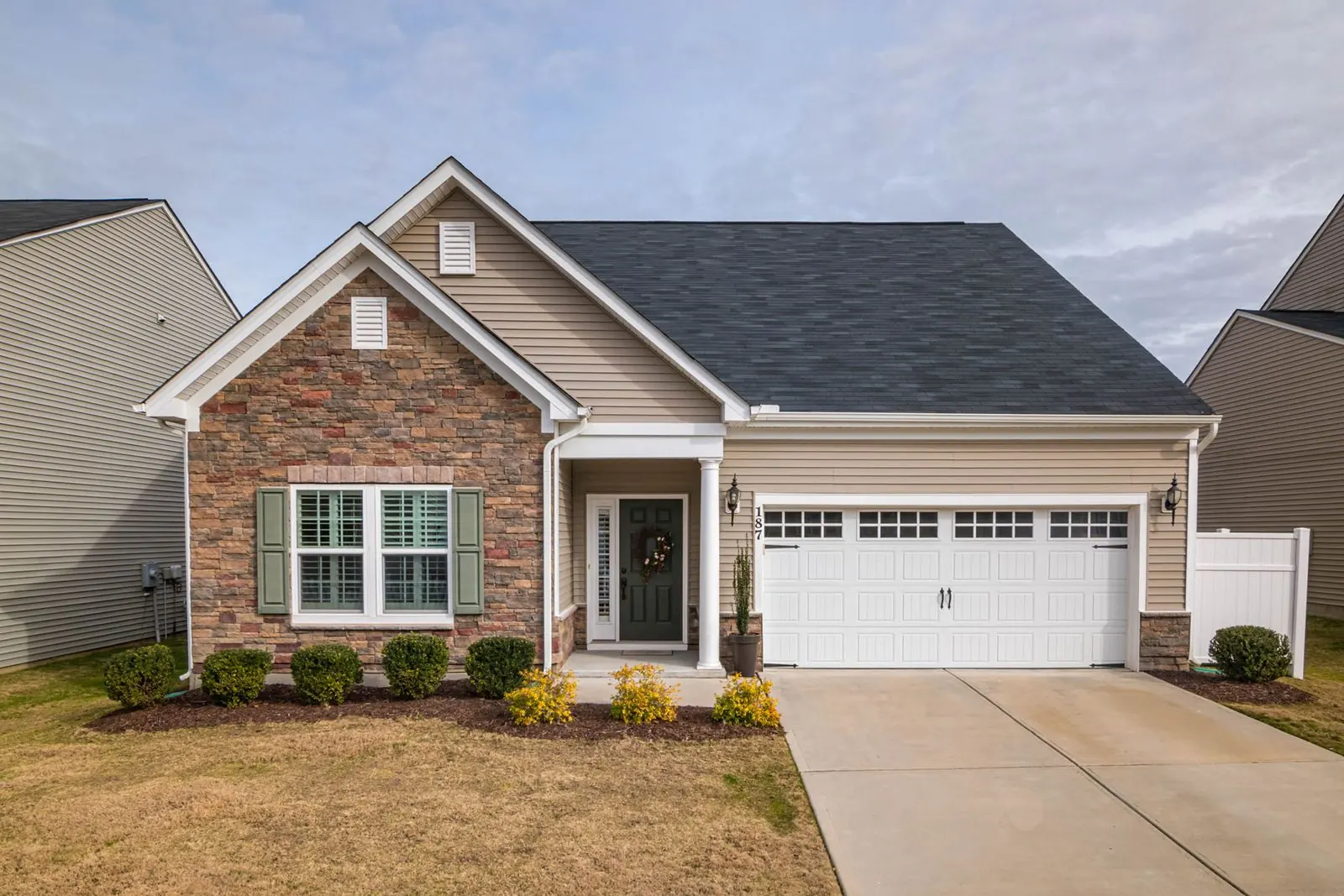
Concrete Resurfacing in Evanston: Driveways, Patios and Walks
A thin cement topping can make a scaled, pitted driveway, patio or walk look new for a fraction of a new pour. It only holds on concrete that is still sound underneath. A screwdriver tells you which kind you have.
Can This Slab Be Resurfaced? Start With the Scrape Test
Every resurfacing product is a thin layer glued to the concrete under it, and it can only be as strong as that concrete. NRMCA's guidance on scaled concrete puts it plainly: the repaired surface will only be as strong as the base it is bonded to. So before you price anything, take a flat screwdriver to the worst flaking spot, then to a spot that still looks good, and drag it hard.
Hard Concrete: A Resurfacing Candidate
The damage is a skin on top of sound concrete. Once the loose surface is cleaned off, a bonded topping has something to hold.
Weak Top Layer: Prep Decides the Resurfacing Job
Still a candidate, but every loose flake has to come off first, by grinding or blasting, not just a rinse. Skip that and the topping bonds to the flakes.
Soft Deep Down: Too Far Gone to Resurface
The concrete itself has broken down. A topping on it lets go with whatever it is stuck to. This slab is a replacement.
Signs a Slab Can Take a Topping
- Hard concrete under the scaling, pitting or popouts.
- Sections sit flat and level with their neighbors, with no lip at the joints.
- Cracks are hairline and have not opened or shifted in a year or more.
- Water runs off; nothing ponds on it or runs back toward the house.
- The surface is bare concrete, or old sealer and paint can be ground off.
Signs a Resurfacer Will Fail
- Soft or crumbling concrete deeper than the surface.
- A section has sunk, tipped or pushed up, or rises in winter and drops in spring.
- Cracks with one side higher, cracks that grow, or a slab broken into pieces.
- Standing water or meltwater that sits on it for days.
- Spalls so deep that the topping would need to be much thicker than the product allows.
A sunken or heaved slab is a different problem. Resurfacing a section that dropped puts a new face on it at the wrong height. Our guide to lifting sunken concrete covers whether it can be raised first; a slab that heaves with frost or a root cannot be fixed from the top.
Resurfacer vs Overlay vs Microtopping: Types of Concrete Resurfacing
“Resurfacing” covers several different products. They are all polymer modified cement layers bonded to old concrete. What changes is thickness, finish, who can apply them, and how much abuse they are meant to take.
| Type | What it is | Thickness | Fits | Watch for |
|---|---|---|---|---|
| Bagged resurfacer | Polymer modified cement mortar sold at home centers, spread with a squeegee or trowel and broomed for grip. Quikrete Re-Cap, Sakrete Flo-Coat and Rapid Set NewCrete are examples. | Re-Cap: feather edge to 1/2 inch, built in layers no thicker than 1/4 inch each. NewCrete: skim coat to 1/8 inch. | Scaled or pitted walks, small patios, driveways in sound shape | Shows uneven color and lap marks if you can't keep a wet edge; demanding about weather |
| Microtopping or concrete dressing | Contractor-grade version of the same idea, often a finer, smoother finish. ARDEX CD is one example and is sold for professional use, not through home centers. | ARDEX CD: 1/16 to 1/8 inch; up to 1/2 inch only in small patches | A uniform new face on a sound slab; foot and car traffic | ARDEX rates it for rubber tire traffic but not heavy truck traffic; needs mechanical prep |
| Spray-down or knockdown texture | A thin polymer cement sprayed or troweled on, then knocked down into a textured finish, often colored and sealed | Thin; varies by system | Patios and walks where texture hides small flaws | Heavy texture is harder to shovel cleanly; the sealer coat needs upkeep |
| Stamped overlay | A thin engineered topping pressed with stamp mats while workable, adding pattern and color to a sound slab | Varies by system | Patios where you want a pattern without a new pour | Same sound-slab rule; the cracks and joints underneath still decide where it cracks |
| Thicker bonded topping | A heavier polymer modified repair mortar placed over deliberately roughened concrete. SikaTop-122 Plus, for one, lists freeze and thaw and deicing salt resistance. | SikaTop-122 Plus: 1/8 to 1 inch neat in one lift | Deeper spalling over sound concrete | Raises the surface the most, so door sills and transitions become the problem |
Thickness and ratings from each maker's technical data: Quikrete Re-Cap Concrete Resurfacer No. 1131-47 (revised January 2023), Rapid Set NewCrete (2022), ARDEX CD Concrete Dressing (updated July 2026), SikaTop-122 Plus (November 2022). Bagged resurfacer data sheets we checked make no freeze and thaw or deicer resistance claim; the ARDEX and Sika sheets do. Stamped overlay background: our stamped concrete page explains why cured concrete cannot take a stamp and where an overlay fits.
Which one fits depends less on the brand than on the slab. A bagged resurfacer or a microtopping renews the wear surface; it does not add strength. ARDEX's own data sheet says thinly applied, non-structural dressings cannot restrain movement in the slab beneath them, which is why the scrape test and the crack check matter more than the product choice.
Moderate scaling, as NRMCA describes it, takes off up to 1/8 to 3/8 inch of surface mortar. That is right at the edge of what a thin resurfacer is built for. Deeper spalls get filled first with a patching mortar or a trowel-consistency mix, then the whole surface gets its topping.
Driveway Resurfacing: Cars, Salt, Plows and the Garage Lip
A driveway is the hardest place to resurface. It carries vehicles, it gets the most salt, and it meets three other surfaces, the garage floor, the sidewalk and the apron, that the topping has to tie into. Here is what is different about a driveway.
Vehicle Loads on a Resurfaced Driveway
A topping does not carry the car; the slab does. If the driveway has cracked into sections that rock when you drive over them, a bonded layer will crack right along with them. Product choice matters too. Quikrete lists vehicle traffic at 24 hours, Rapid Set at 4 to 8 hours for NewCrete, and ARDEX rates CD for rubber tire traffic but not heavy truck traffic. A driveway that sees a delivery truck or a dumpster has to plan around that.
Salt, Shovels and Plows on Driveway Resurfacing
Evanston's adopted building code classifies the area as severe for concrete weathering, and the Portland Cement Association ran its long term salt scaling test plot next door in Skokie. Salt is what scaled the driveway in the first place, and it goes after the new surface next. NRMCA warns that poor drainage, where salt water stands on a surface, greatly increases the severity of exposure. Steel plow blades and ice choppers can also gouge a thin topping. Ask whoever is resurfacing the driveway what the product is rated for, and what the sealing schedule is after it cures.
Driveway Transitions at the Garage, Sidewalk and Apron
Every topping raises the surface. Quikrete's resurfacer runs from a feather edge to 1/2 inch, and a thicker bonded topping more. At the garage door, that can leave a lip against the garage floor or bear on the rubber seal at the bottom of the door. At the public sidewalk, the topping has to feather down cleanly so nobody catches a toe. The apron between the sidewalk and the street sits in the city right of way, where the city sets the rules, so call 311 before anyone works on that part. And the expansion joints at each of those edges have to stay open: Quikrete's instructions call for old expansion joints to be maintained and raised to the new height.
If the driveway fails the scrape test, or the sections have moved, our driveway replacement page covers what a new one on a corrected base involves, including Evanston's permit and apron rules.
Patio Resurfacing: Door Sills, Drainage and Furniture
Patios are friendlier to resurfacing than driveways. No car weight, usually less salt, and the work can stop at the patio edge instead of a public walk. The traps are different.
- The door sill. A patio poured right up to a back door often has little room to spare. Even a thin topping raises the step down from the house, and a thick one can put the patio surface level with the sill, where meltwater runs under the door. Measure before choosing a thickness.
- The pitch. A topping follows the slab under it. If the patio already sends water toward the foundation, resurfacing gives you a nicer looking slab that still drains the wrong way. Fix the pitch first, and if the house side has sunk, see whether it can be lifted.
- The edge against the house. The joint where the patio meets the foundation is an isolation joint. It has to stay open and get a flexible sealant, not be bridged by the topping.
- The finish. Smooth toppings get slick in rain and frost. Broom texture, or a grit additive in the sealer, keeps a patio walkable.
- Pattern. If you want the look of stone or brick on an existing slab, a stamped overlay is the resurfacing option for that. On a slab that fails the scrape test, a new patio pour is the honest answer.
Driveway Resurfacing Cost: National Figures and What Drives Them
We do not resurface driveways or patios, so these are published national figures, not our prices and not a quote for your slab. They are useful for checking whether a bid is in a normal range.
| Item | National figure | Source |
|---|---|---|
| Concrete resurfacing, general | $3 to $9 per square foot, about $6 on average | Bob Vila, updated December 2023 |
| Driveway resurfacing | $3 to $9 per square foot | Bob Vila, updated December 2023 |
| Driveway resurfacing | $2.50 to $4 per square foot; about $1,440 to $2,300 for a 24 by 24 foot driveway | Fixr, updated January 2025 |
| Resurfacing a 500 square foot driveway | $2,000 to $5,000 | Thumbtack, updated July 2026 |
| Patio resurfacing, average | $4 per square foot | Bob Vila, updated December 2023 |
| Stamped pattern | $4 to $12 per square foot | Thumbtack, updated July 2026 |
| Small job flat fee at some contractors | At least $500 to $1,000 | Thumbtack, updated July 2026 |
| Do it yourself resurfacing | $2 to $5 per square foot | Bob Vila, updated December 2023 |
| Tearing out and replacing a concrete driveway, for comparison | $5 to $24 per square foot, including labor | Fixr, updated January 2025 |
The spread between those sources is mostly prep. What moves a resurfacing bid:
- Surface preparation. Grinding or shot blasting a whole driveway, and stripping old sealer, costs more than a pressure wash. It is also the part that decides whether the job lasts.
- Patching first. Every deep spall, popout and crack gets filled before the topping, and a badly scaled slab can need a lot of it.
- The system. A one coat bagged resurfacer, a microtopping with a sealer, and a colored or stamped overlay are priced very differently.
- Joints and edges. Taping and recutting joints, feathering to the garage and the walk, and dealing with the apron all take labor.
- Size and minimums. A small walk can hit a contractor's minimum charge; a big driveway spreads the setup over more square feet.
Here is the admission that costs us something. On a slab that passes the scrape test, resurfacing usually costs far less than the tear out and new pour we would sell you; compare Fixr's resurfacing and replacement rows above. If your slab qualifies, that difference is yours to keep.
Resurface or Replace the Concrete?
The honest answer comes from what is wrong with the slab, not how bad it looks. Ugly and sound is a resurfacing job. Neat-looking and moving is not.
| What you see | Usual answer | Why |
|---|---|---|
| Scaling or pitting across the slab, hard underneath, flat sections | Resurface | The wear is only on top; a bonded topping replaces the wear surface |
| One bad patch by the garage or the back door, rest sound | Patch | Spot repairs cost less than topping the whole slab; see our guide to cracked, scaled and sunken concrete |
| Surface soft or crumbling well below the scale | Replace | Nothing sound to bond to |
| A section sunk or tipped as one piece | Lift, then decide | Topping a sunken section freezes it at the wrong height |
| Sections heaved by frost or a root, or broken into pieces | Replace | The cause is under the slab, and the topping will crack along every break |
| Cracks that open every winter | Replace, or accept the cracks | Moving cracks telegraph through any thin topping |
| Public sidewalk square in front of the house | City first | It sits in the right of way; under Evanston's 50/50 program a square scaled across a third of its surface qualifies for replacement |
On the public walk, call 311 before doing anything to a city square; our page on replacing sidewalk squares through the 50/50 program covers how that works.
How Long Resurfaced Concrete Lasts With Salt and Freeze-Thaw
The national figures are encouraging. Bob Vila's cost guide says resurfaced concrete lasts about 8 to 15 years on average before it needs significant repairs, and Fixr says a resurfaced driveway should not need resurfacing again for at least ten years. Those are national averages, not North Shore driveways, and the ones that come up short here usually fail in one of four ways.
- Delamination. The topping lets go in sheets, often in the first winter, because it was bonded to dust, sealer, salt residue or weak concrete.
- Reflected cracks. Cracks in the slab reappear in the topping where the base keeps moving. Quikrete says plainly that old cracks can reappear due to movement in the base concrete.
- Scaling again. Salt and freeze and thaw work on the new surface the same way they worked on the old one. NRMCA lists excessive calcium or sodium chloride on a weak surface as a main cause of scaling.
- Edge damage. Feathered edges at the garage, the walk and the joints are the thinnest part of the topping and the first to chip.
The habits that make new concrete last help a resurfaced slab too. Keep downspout water and standing meltwater off it. Go light on salt, use sand for traction where you can, and never use fertilizer-type deicers; NRMCA warns that ammonium sulfate and ammonium nitrate are chemically aggressive and destroy concrete surfaces. Many systems are sealed after they cure, and keeping up with that sealer is part of the deal.
Surface Prep: Why Concrete Overlays Delaminate
Nearly every resurfacing failure comes down to bond, and bond comes down to prep. The data sheets agree on the goal, a clean, sound, bare surface, and differ mostly on how hard you have to work to get there.
Concrete Surface Profile for a Bonded Overlay
Installers describe roughness with the concrete surface profile scale from the International Concrete Repair Institute, CSP 1 for nearly flat up to CSP 10 for very rough. On that scale grinding produces about a CSP 2, light to medium shot blasting about CSP 3 to 5, and scabbling about CSP 8. The thicker the topping, the rougher the surface it needs: Sika calls for a CSP 5 to 6 profile under SikaTop-122 Plus. Bagged resurfacers ask for less. Quikrete's instructions call for scraping, chipping or grinding off loose material, then a 2,500 psi pressure washer, which it says is essential to a proper bond.
Sealers, Oil and Salt Under a Resurfacer
A topping will not stick to anything that is not concrete. Quikrete says to apply only to bare concrete, not painted or sealed surfaces, and warns that incomplete rinsing of cleaning solutions interferes with the bond. ARDEX lists dirt, oils, paint, curing compounds, sealers and old patching materials as bond breakers, and says not to use acid etching or solvents for its product but mechanical methods such as shot blasting or grinding. On a driveway, years of oil drips and winter salt sit in the surface pores; that is the layer prep has to remove. If the slab is still sound and you are weighing a sealer instead, our guide to sealing concrete covers that decision.
Moisture rules differ by product, so follow the one you use. Quikrete, Rapid Set and Sika want the old concrete saturated but with no standing water before the topping goes on; ARDEX wants its substrate dry. Mixing those instructions up is a common way to ruin a bond.
Cracks and Joints Under a Concrete Overlay
A topping cannot stop a slab from moving, and the movement shows up in the topping. That is the single biggest gap between what homeowners expect from resurfacing and what it delivers.
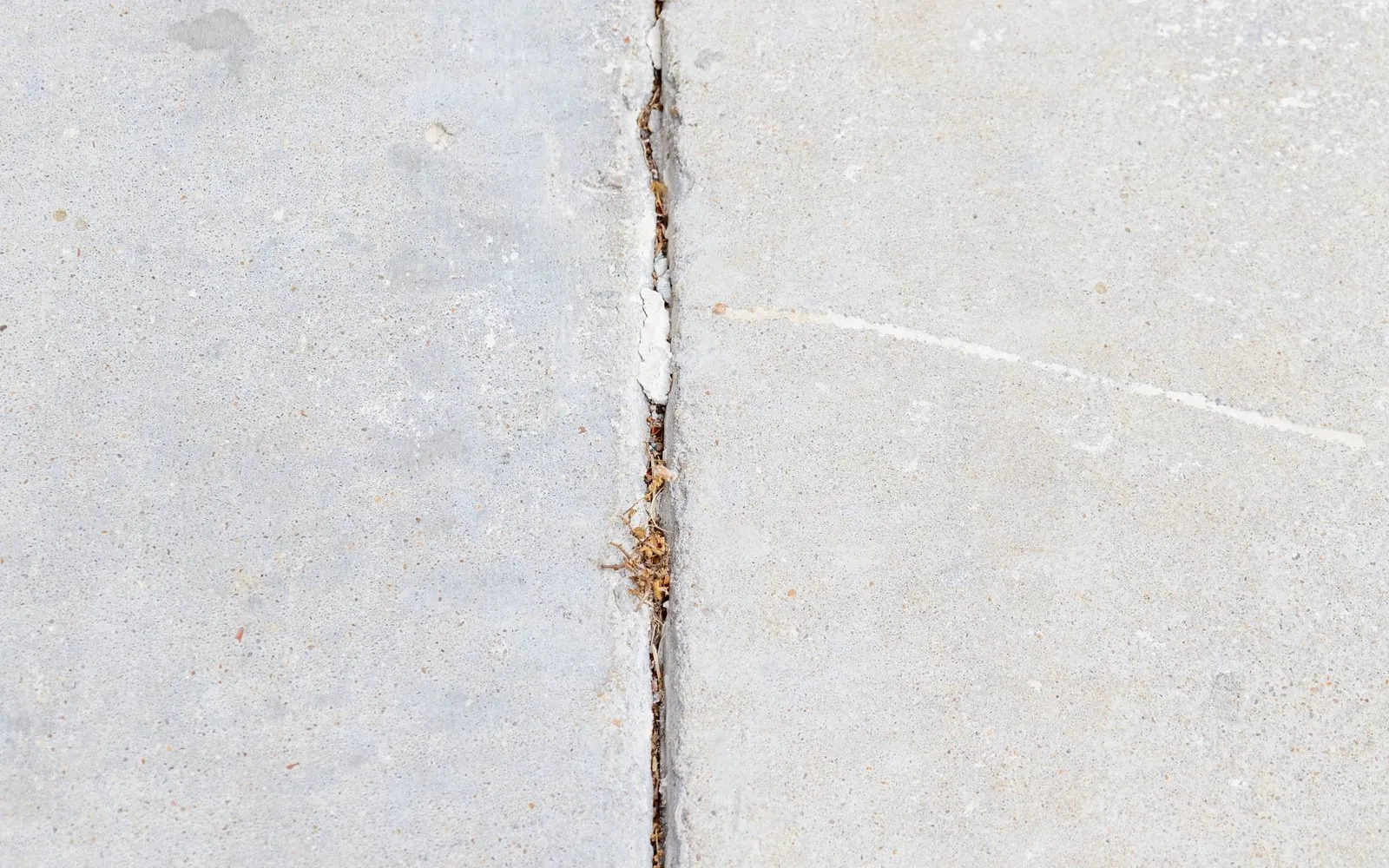
- Joints stay joints. Quikrete says existing control joints should be maintained and calls it essential that control and expansion joints be kept open. ARDEX says all joints, and all moving cracks, must be honored up through the topping, and that its product should never be installed over them. In practice the joints are taped off or recut so the topping stops at each one.
- Dormant cracks get filled first. Quikrete has cracks widened, cleaned and filled before resurfacing; ARDEX pre-fills dormant cracks wider than a hairline with a rigid crack filler. Even then, Quikrete says reflective cracking cannot be completely prevented, especially where the slab lacks adequate control joints or settles.
- Moving cracks stay visible. A crack that opens in winter and closes in summer will come back through any thin topping. It gets a flexible sealant, like a joint, and you accept the line.
- Product compatibility matters. Quikrete warns against putting its resurfacer over acrylic or polyurethane crack fillers. If you have already sealed cracks with something from the store, it may have to come out first.
If you are not sure whether a crack is still moving, our concrete repair guide walks through how to tell the crack types apart before you spend money on top of them.
When to Resurface Concrete in Evanston
Resurfacers are fussier about temperature than the concrete under them. Every data sheet we checked sets a floor, and most care about the night after as much as the day of.
| Product (data sheet) | Temperature limit | Weather after | Traffic |
|---|---|---|---|
| Quikrete Re-Cap (January 2023) | Air and concrete 50°F to 90°F | Protect from rain at least 8 hours; moist cure 24 to 48 hours | Foot 8 hours, vehicles 24 hours |
| Sakrete Flo-Coat (2019 Canadian sheet) | Product, air and surface above 50°F and staying there at least 24 hours | Protect from freezing 24 hours and from rain 8 hours | Not listed |
| Rapid Set NewCrete (2022) | Surface at least 50°F; not on frozen surfaces; slower below 70°F | Not listed | Foot 2 to 3 hours, drive 4 to 8 hours |
| ARDEX CD (July 2026) | Substrate and air at least 50°F during installation and cure | No rain within 6 to 8 hours; no freezing within 24 hours | Walk in about 2 hours; vehicles after the sealer dries |
| SikaTop-122 Plus (November 2022) | Air and substrate above 45°F | Not listed | Not listed |
What that means here: a crisp October afternoon that reaches the mid 50s and drops toward freezing overnight fails the ARDEX and Flo-Coat rules, and a slab can stay colder than the air for a while after a cold snap. Plan resurfacing for the warm months, and avoid the hottest days too, since Quikrete caps its range at 90°F.
The other reason to go early is salt. A topping finished in late fall meets its first plowing and its first salt within weeks. NRMCA's rule for new concrete is no deicing salts in the first year, and the same logic favors resurfacing in late spring or summer, so the new surface has a full season to cure and get sealed before winter.
DIY Concrete Resurfacer or a Pro?
Bagged resurfacers are sold to homeowners for good reason. On the right slab they are a fair do it yourself job, and on the wrong one no amount of skill saves them.
Where a Bagged Resurfacer Works
- A small, sound walk or stoop landing with light scaling, done section by section between joints. Quikrete suggests working areas no larger than about 144 square feet at a time.
- A modest patio where the joints are clear and you can keep a wet edge from one joint to the next.
- Material math you can check. Quikrete says one 40 pound bag of Re-Cap covers about 65 square feet at 1/16 inch, or about 16 square feet at 1/4 inch.
Where DIY Resurfacing Goes Wrong
- Prep. A rented pressure washer does not take off old sealer or salt-soaked surface. Grinding and blasting take equipment most people do not own.
- Working time. Quikrete gives about 20 minutes of working time at 73°F at squeegee consistency. A two car driveway is a crew job, not a one person job.
- Color and laps. Each batch and each stopping point can show. Quikrete notes that color varies with water, curing conditions and the concrete underneath.
- Weather. Rain within 8 hours, a cold night, or a hot, windy afternoon can ruin the surface before it cures.
So the honest split: a small, sound walk or patio with surface scaling is a reasonable weekend for a careful homeowner, and Bob Vila's guide puts the savings over a pro at only $1 to $4 per square foot. A whole driveway, a slab with old sealer on it, or anything with a garage, sidewalk or door transition is where a resurfacing contractor's prep and crew earn the difference.
Not sure your slab passes the scrape test?
Text a close photo of the worst spot and a wide one of the whole slab. We will tell you whether it looks like a resurfacing candidate, which means a call to a resurfacing specialist or a weekend project, or a replacement.
(847) 380-8138Concrete Resurfacing Near Me: Who Does What
We are a flatwork contractor, and we do not resurface driveways, patios or walks. When a slab is soft deep down, heaving, structurally cracked or settled, a topping is the wrong fix and replacement is what we do. A sound slab with surface wear is often a resurfacing specialist's job, or a careful do it yourself job, and we would rather tell you that than sell you new concrete you do not need. The related work on this site:
- Garage floor repair, which includes resurfacing pitted and salt scaled garage floors once the weak surface is ground off.
- Concrete steps and stoops, including patching and resurfacing worn steps, and bonded overlays on steps that are sound but worn everywhere.
- Driveway replacement, built on a corrected base when the old driveway has failed from the bottom up.
- New concrete patios, when the old slab fails the scrape test or the yard needs a different layout anyway.
- Our concrete repair guide, for patching, crack sealing and the other fixes short of a new surface.
Text a photo to (847) 380-8138 or use the form. Leave the service menu on Not Sure and describe the surface and where it is.
Get a Free Estimate
Tell us about the project and we will get back to you within one business day. Prefer to talk? Call or text (847) 380-8138.
Concrete Resurfacing Questions
Over dormant ones, with care. Quikrete's resurfacer instructions say cracks must be widened, cleaned and filled first, and still warn that reflective cracking into the new surface cannot be completely prevented and that old cracks can reappear if the base concrete moves. ARDEX says moving cracks must be honored up through the topping with a flexible sealant, never covered. If a crack opens and closes with the seasons, plan on seeing it again.
It depends on the product. Quikrete's Re-Cap data sheet says to wait 8 hours for foot traffic and 24 hours for vehicles. Rapid Set lists 4 to 8 hours to drive on its NewCrete resurfacer. ARDEX says to keep vehicles off its concrete dressing until the sealer over it has dried thoroughly. Cold, damp weather stretches all of those times.
Not as it is. Quikrete's resurfacer is for bare concrete only, not painted or sealed surfaces, and ARDEX lists curing compounds and sealers among the bond breakers that must be removed, by mechanical methods such as grinding or shot blasting. A slab that has been sealed for years has to be ground clean before any topping goes on.
On a sound slab, yes, by a wide margin. Fixr's national cost guide, updated January 2025, puts concrete resurfacing at $2.50 to $4 per square foot and replacing a concrete driveway at $5 to $24 per square foot including labor. The saving is only real if the topping holds, which is what the scrape test on this page is for.
Go easy, especially the first winter. NRMCA's guidance on scaling tells owners of new concrete to skip deicing salts the first year and use sand for traction, and to never use ammonium sulfate or ammonium nitrate as a deicer at all. The bagged resurfacer data sheets we checked make no deicer resistance claim, so treat a fresh topping at least as gently as new concrete and ask the installer what their product allows.
Not driveways, patios or walks. Our garage floor repair work includes resurfacing pitted and salt scaled garage floors, and our step work includes patching and resurfacing worn steps and bonded overlays on steps that are sound but worn everywhere. For a sound driveway, patio or walk with surface wear, a resurfacing specialist or a careful do it yourself job is usually the cheaper call. When the slab is soft deep down, heaving, structurally cracked or settled, replacement is the work we do.
Worn Driveway or Patio? Check the Concrete Before the Topping
Evanston Concrete Co is a concrete contractor in Evanston serving the North Shore. Send a photo and we will tell you straight whether it looks like a resurfacing job, a replacement, or something smaller.
(847) 380-8138