Concrete Garage Floor Repair in Evanston, IL
Crack repair, resurfacing, and leveling for garage floors that are cracked, pitted, or sinking. And a straight answer when the slab is past repairing.
Garage Floor Repair in Evanston
The crack you could ignore last spring now catches the snow shovel, and the concrete in the tire lanes has started coming up in flakes. That is usually the moment people start looking for garage floor repair in Evanston, IL, and a floor in that shape is usually still worth fixing. We repair concrete garage floors: filling and sealing cracks, resurfacing pitted and salt scaled slabs, and leveling sections that have sunk. We also say so plainly when a repair would be money wasted, because some floors are past it. Call or text a photo to (847) 380-8138 and find out which kind you have.
Get a Garage Floor Repair Estimate
Tell us what the floor is doing and about how big the garage is. We look at the slab, tell you whether it is a repair or a replacement, and put the price in writing.
The service menu has no garage choice, so pick Not Sure and describe the floor in the details box.
Get a Free Estimate
Tell us about the project and we will get back to you within one business day. Prefer to talk? Call or text (847) 380-8138.
Why Evanston Garage Floors Crack, Pit, and Sink
A garage floor takes a beating the rest of your concrete never sees. The car carries in snow, road salt, and the brine sprayed on Evanston streets ahead of a storm, then drips it onto the same few square feet every night. Long term weather records at O'Hare count about 56 freeze and thaw cycles in an average year, and each one is a chance for water sitting in a crack or a joint to freeze and pry it a little wider. None of that means the slab is finished. It means the damage is cheaper to stop this year than next.
Garage Floor Crack Repair
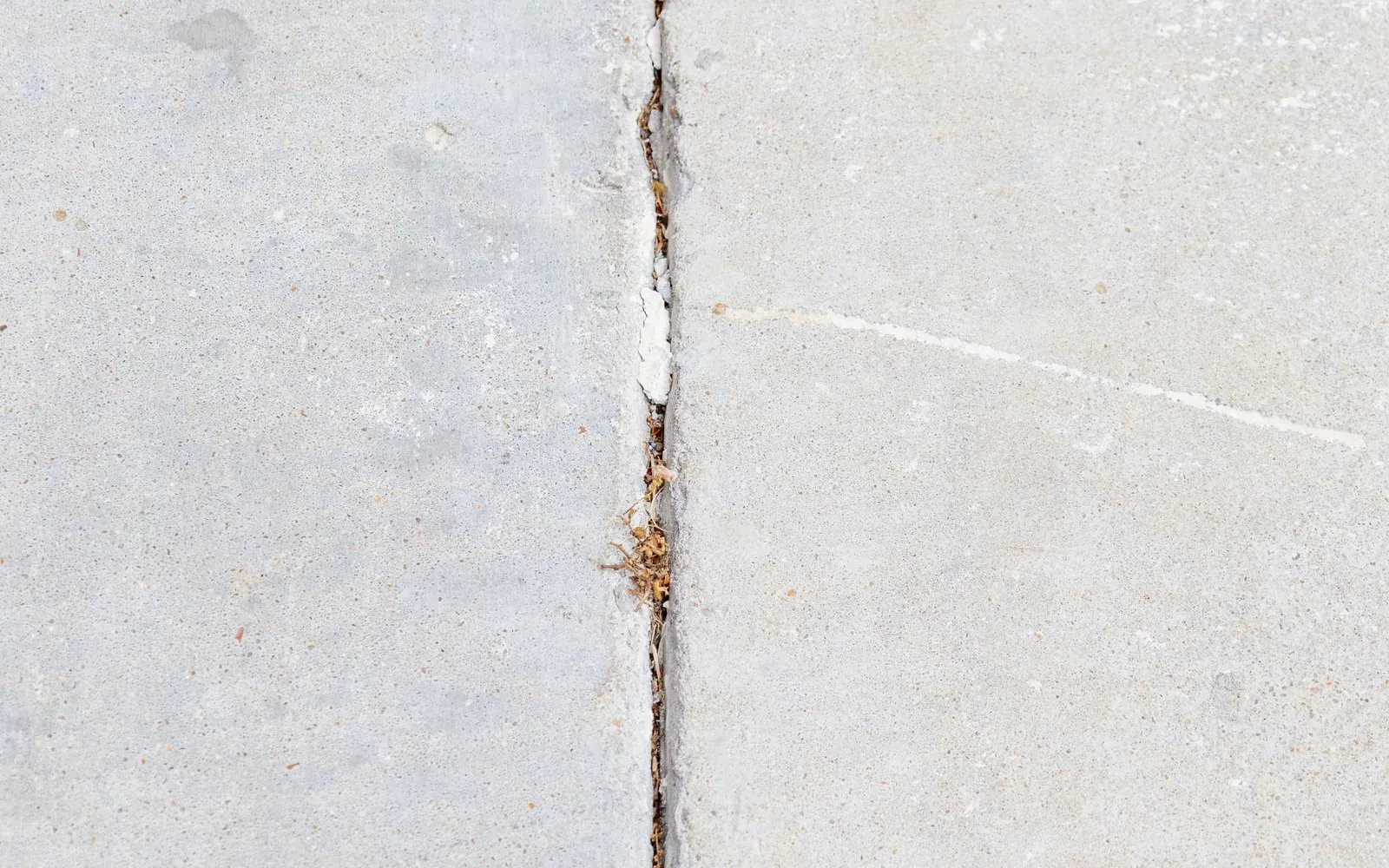
Nearly every garage floor has cracks, and most of them are harmless. Concrete shrinks as it cures, and a hairline crack that has looked the same for years is the slab relieving that stress, nothing more. The reason to repair it is what gets into it. An open crack is a funnel for salt water in a room that freezes, and that is how a thin line becomes a wide one with crumbling edges.
How a Cracked Garage Floor Gets Repaired
A lasting garage floor crack repair is mostly preparation. The crack is opened up and cleaned down to sound concrete, filled with a flexible repair material made for floors that carry vehicles, and finished flush so a broom or a creeper rolls right over it. Caulk from the hardware store smeared across the top peels out in a season, because nothing underneath it was cleaned.
When a Garage Floor Crack Means the Slab Is Moving
Here is the check that matters. Set a straightedge, or just the sole of your shoe, across the crack. If both sides sit at the same height, it is a crack repair. If one side is higher than the other, or the crack is wider every spring, the slab is moving, and filling it only hides the symptom. That floor needs leveling, covered below, or a closer look at what is going on underneath it.
Garage Floor Resurfacing for Pitted and Salt Damaged Concrete
Pitting and flaking are the classic Evanston garage floor problem. The surface comes off in thin scales, usually starting in the tire lanes and just inside the door where the salt lands, and leaves a rough, sandy texture that holds dirt and water. The local building code rates this area as severe for concrete weathering, and a floor poured without air entrained concrete, which describes many older garages, shows it first.
When the damage is shallow and the concrete under it is hard, garage floor resurfacing is the right repair. The weak surface is ground off until solid concrete is exposed, pits and low spots are patched, and a polymer modified concrete overlay is bonded across the whole floor so it ends up one even color and texture. Over a sound slab, that gives you a floor that looks and sweeps like new for much less than tearing one out.
Why Garage Floor Resurfacing Sometimes Fails
Resurfacing is the garage floor repair that fails most often, and it fails for one reason. An overlay is only as good as its bond, and the bond is only as good as the prep. Troweled over dusty, salt soaked, or soft concrete, it lets go in sheets, sometimes within a single winter. If the slab is weak all the way down, we will tell you that instead of selling you a new surface on a bad floor, and point you to garage floor replacement.
One local detail belongs here. A resurfacing layer raises the floor a little, and Evanston's code wants the door into the house to sit a set height above the garage floor. A thin overlay does not come close to using that up, but it is the reason a thick topping is no shortcut around a failed slab.
Garage Floor Leveling for Sunken and Uneven Slabs
A garage floor is usually a slab resting on fill inside the foundation walls, not tied to them. When that fill settles or washes out, the floor follows it down. You see it as a crack with a lip, a section that rocks under a tire, a gap opening along a wall, or water that now runs to one corner and sits there.
There are two ways to fix an uneven garage floor, and the concrete decides which one fits. If the sunken section is still one solid piece, garage floor leveling by slab lifting is often the cheaper route: small holes are drilled, material is pumped underneath to fill the void and raise the slab back to height, and the holes are patched. If the section has broken into pieces, there is nothing solid left to lift. That part gets cut out, the base is rebuilt and compacted, and new concrete is poured to meet the floor around it.
Fix the Water Before Leveling a Garage Floor
Settling almost always has a cause, and it is almost always water: a downspout emptying beside the garage, an apron pitched toward the door, runoff from an unpaved alley finding its way in. Lifting a slab without dealing with what washed it out is a repair that does not last. If the driveway or apron is what sends water into the garage, that is covered on our concrete driveway page, and the two are worth pricing together.
Garage Floor Repair or Replacement?
This is the question behind every estimate, and the answer comes from the slab, not from which job is bigger. A garage floor is a good candidate for repair when:
- Cracks are narrow and level. Both sides sit at the same height and the crack is not growing.
- Surface damage is skin deep. The concrete under the flaking is hard when you scrape it and does not sound hollow when you tap it.
- Any sunken section is still one piece. A solid slab can be lifted or cut out cleanly.
- Water drains toward the vehicle door, or can be made to with a local fix.
It is time to price a new floor instead when the slab has broken into many pieces that move against each other, when the surface is soft or crumbling well below the top across most of the floor, when the whole slab pitches toward a wall or the house, or when the repairs it needs add up to a large share of what a new floor costs. If that is your garage, our garage floor replacement page explains how a new slab goes in inside the existing walls.
Waiting is the one choice that only gets more expensive. Evanston's property maintenance code requires detached garages to be kept structurally sound and in good repair, and a floor that has started breaking up does not slow down on its own.
Cracked Garage Floor? Text Us a Photo
Send a picture of the cracks, the pitting, or the low spot, and we will tell you honestly whether it is a repair or a replacement.
(847) 380-8138The Best Time for Garage Floor Repair in Evanston
Repair materials are fussier about temperature than fresh concrete. Fillers and overlays need the slab itself, not just the air, warm enough to cure, and an unheated garage here does not offer that for a good part of the winter. The floor also has to be dry, and the salt has to be cleaned out of the surface before anything will bond to it.
That makes late spring through early fall the working season for most garage floor repairs, and fall the one with a deadline. A crack sealed before the first road salt arrives does not spend the winter getting wider. After that, a repaired floor wants the same care as a new one: hose the tire lanes off a few times each winter, and keep deicer off the slab.
Garage Floor Repair Cost in Evanston
Garage floor repair cost comes down to how much preparation the slab needs, far more than the material that goes on it. For crack repair, the number moves with the total length of the cracks and how wide they have opened. For resurfacing, it is the square footage plus how much grinding and patching it takes to reach sound concrete. For leveling, it is how far the slab has dropped and how large the void under it is.
Two things surprise people. Small repairs do not shrink to small prices, because the equipment and the trip are the same for one crack as for six, so it pays to handle everything the floor needs in one visit. And the lowest quote is often low because it skips the prep, the part that decides whether the repair lasts. Ask any garage floor repair contractor exactly how the surface will be prepared before you compare numbers.
We do not publish a price sheet for repairs, because two floors of the same size can need very different work. You get a written estimate after we have seen the slab, and a straight answer on whether repair or replacement is the better buy. Pricing for a new floor is explained under garage floor replacement costs.
Garage Floor Repair Questions
Most cracked garage floors can be repaired. If the crack is narrow and both sides sit at the same height, it gets cleaned out, filled with a flexible repair material, and finished flush. If one side has dropped, the slab has moved, and the fix is leveling that section or cutting it out and repouring it. Replacement is for floors broken into many moving pieces, or pitched the wrong way across the whole slab.
It depends almost entirely on what is under it and how the floor was prepared. An overlay bonded to hard, clean, dry concrete wears like part of the floor through daily parking and winter salt. The same product over weak or salt soaked concrete can peel in its first winter. That is why the old surface gets tested before anyone recommends garage floor resurfacing, and why we talk people out of it when the slab will not hold a bond.
Narrow, level cracks are a reasonable weekend job if you are patient about cleaning them out first, and a decent concrete crack filler from the store will do it. Resurfacing and leveling are different. Resurfacing lives or dies on grinding the old surface, which takes equipment most people do not own, and lifting a slab takes a pump and practice reading how the concrete responds. Those are the two garage floor repairs most likely to need redoing when the prep is skipped.
Evanston's permit rules do not name garage floor repair one way or the other. The city requires a building permit to remove and replace flatwork, and its own guidance says not every regular maintenance or repair project needs one, so a filled crack and a rebuilt section of slab may not be treated the same way. The safe move is to ask the city's permit desk before work starts, because work begun without a required permit carries an added fee. It is one of the things we check before a job is priced.
Late spring through early fall. Repair materials need the slab warm and dry to cure, and an unheated garage in an Evanston winter is neither. Fall is the season with a deadline, since a crack sealed before the first road salt arrives does not spend the winter getting wider. If the floor fails in January, the usual plan is to keep it clean and book the repair for spring.
It depends on the repair. A filled crack or a lifted slab can usually take a car again within a day or so. A resurfaced floor needs longer, typically several days before vehicles, and longer than that before the first salt lands on it. The exact wait for the materials used on your floor comes with the estimate.
Talk to a Garage Floor Repair Contractor in Evanston
Evanston Concrete Co is a concrete contractor in Evanston that repairs garage floors and replaces the ones that cannot be saved. Call, text a photo, or send the estimate form.
(847) 380-8138