Stamped & Decorative Concrete in Evanston, IL
The look of stone, slate, or brick in one continuous slab. No joints for weeds, no units to wander out of level, one structure doing the work.
Stamped Concrete Patios, Walkways, and Borders
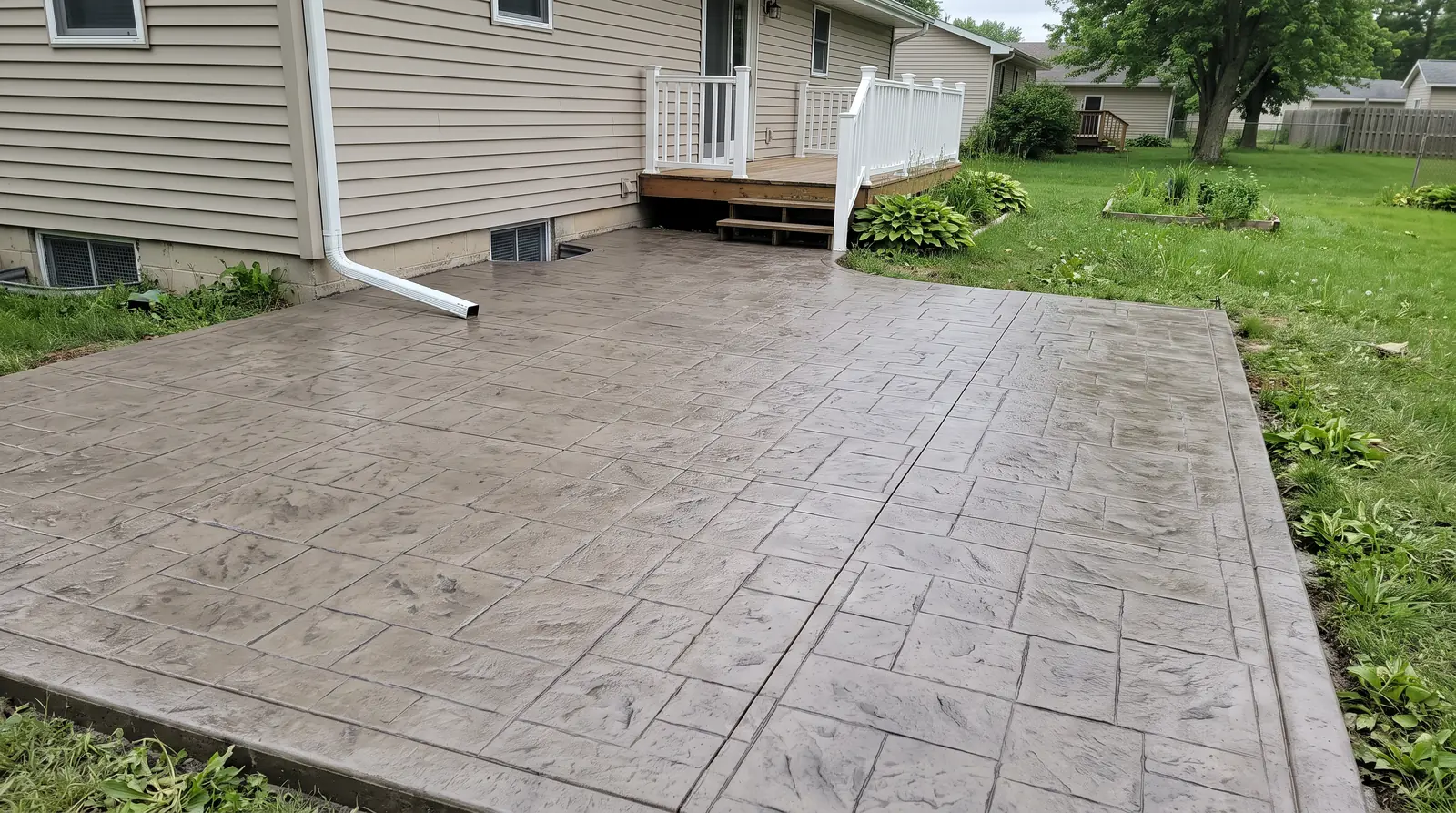
Stamped concrete is ordinary structural concrete that gets one extra act: while the slab is still plastic, texture mats press a pattern into the surface, and color built into and dusted onto the mix makes the pattern read as stone, slate, or brick. What you end up with is a single continuous slab wearing a finish, which is exactly why people choose it over the materials it imitates. Real pavers sit on sand as hundreds of independent pieces; here, every freeze lifts a few and every thaw drops them somewhere slightly different, and the sand joints farm weeds all summer. A stamped slab has no loose pieces to move and no open joints to plant.
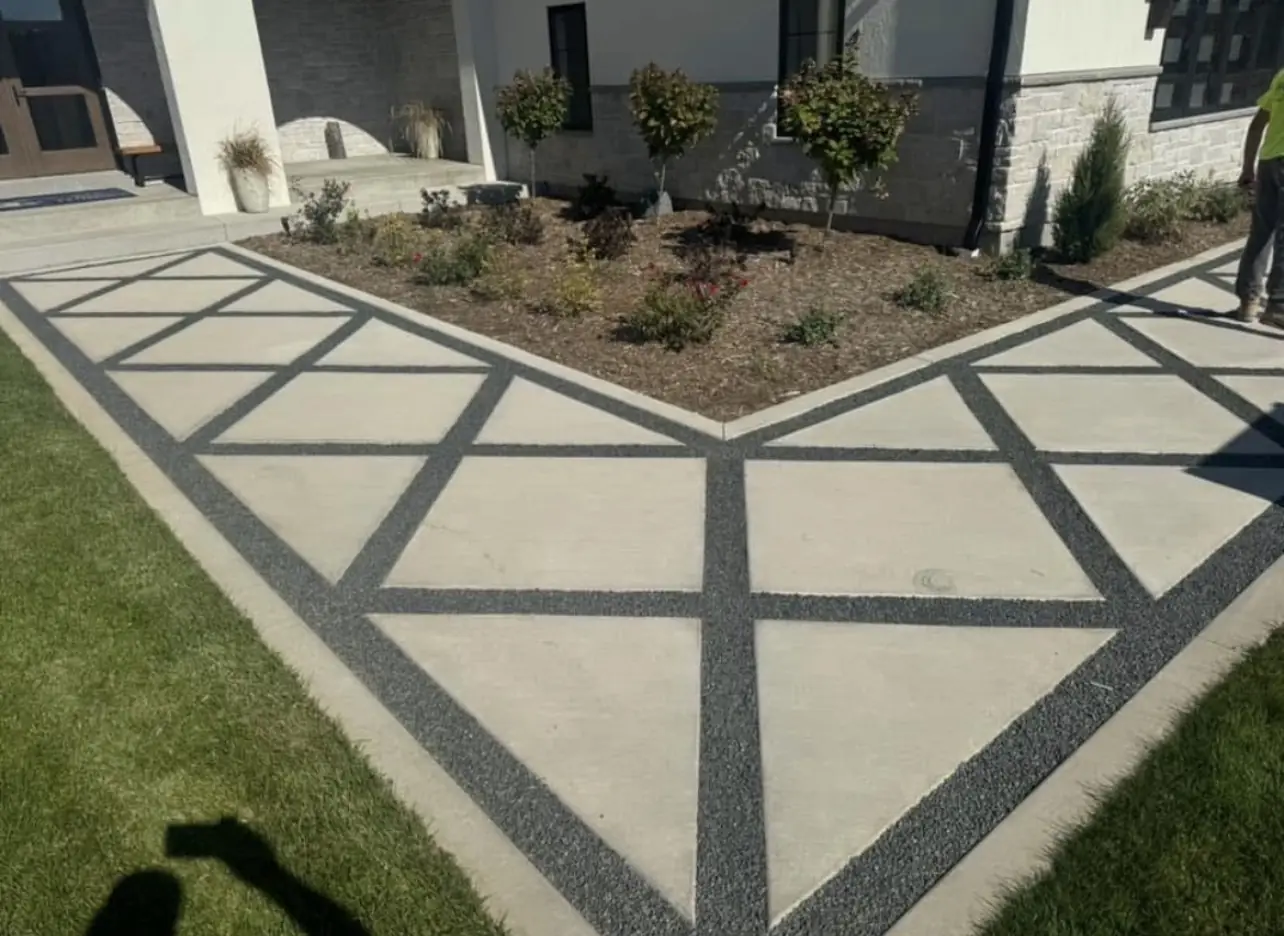
We stamp patios, walkways, pool surrounds, and borders, and one of the most cost effective uses in town is the accent band: a stamped border framing a plain broom field on a driveway or a front walk. You pay for decorative finishing on two feet of border, not four hundred square feet of field, and the curb appeal reads nearly the same.
Popular Stamp Patterns
Patterns are texture mats, so the menu is wide. These four cover most Evanston projects.
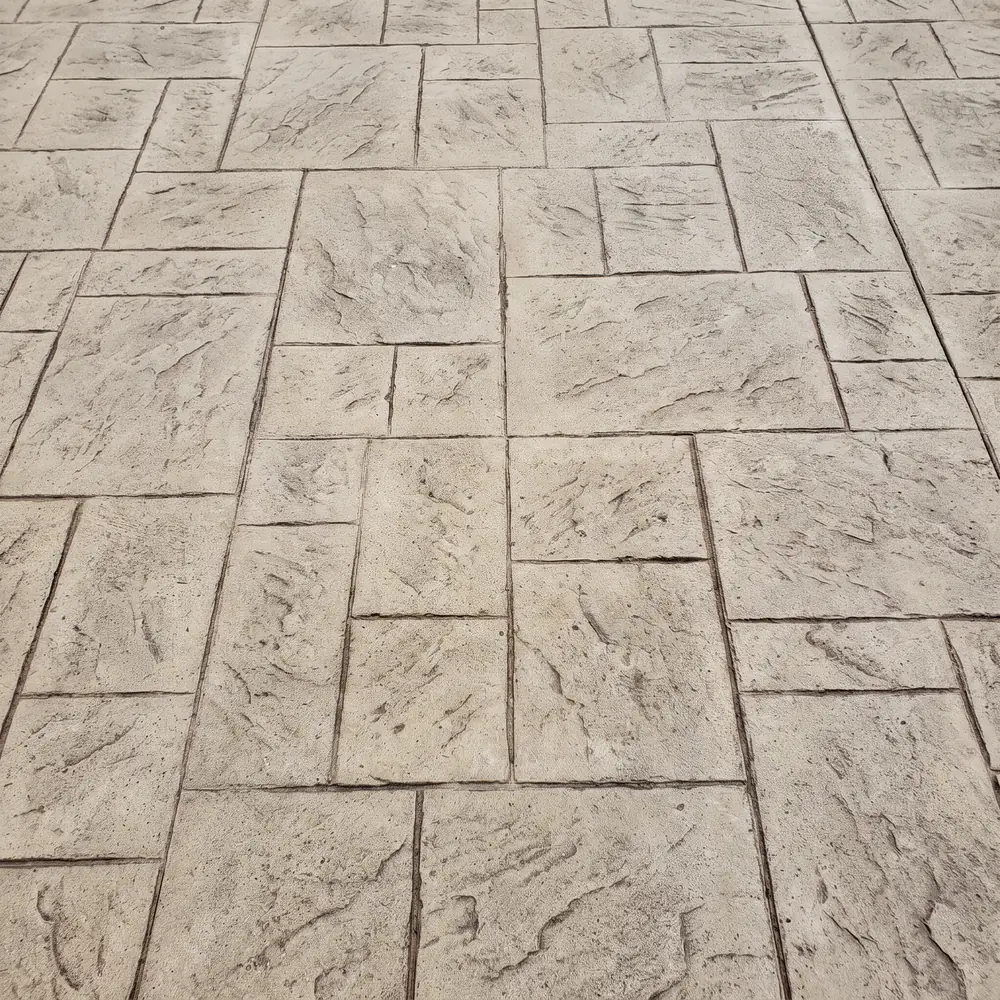
Ashlar Slate
Rectangles of varied size with a cleft slate texture. The most architectural of the standard patterns and the easiest to match to brick and stone houses. Usually colored in grays or buff tones.
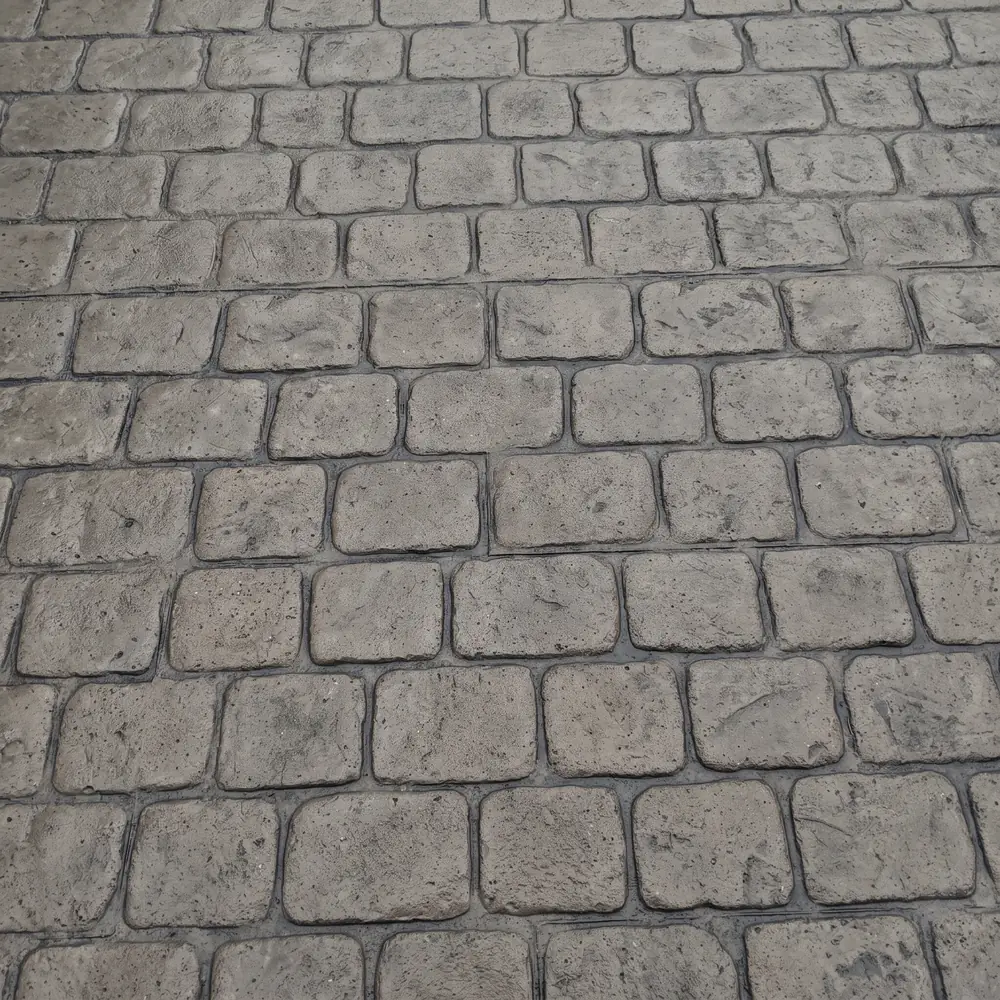
Cobblestone
Rounded setts in running rows, the old street look. Busy enough to hide leaves and drips, traditional enough to suit Evanston's older blocks. Reads best on walks and borders.
Wood Plank
Grain and board lines pressed into concrete, stained in timber tones. The deck look without splinters, rot, or board replacement, popular for patios where wood would sit too close to grade.
Herringbone Brick
Classic zigzag brick coursing. Formal, geometric, and familiar from a century of Chicago area walkways. Strong choice for front paths and stamped borders around plain fields.
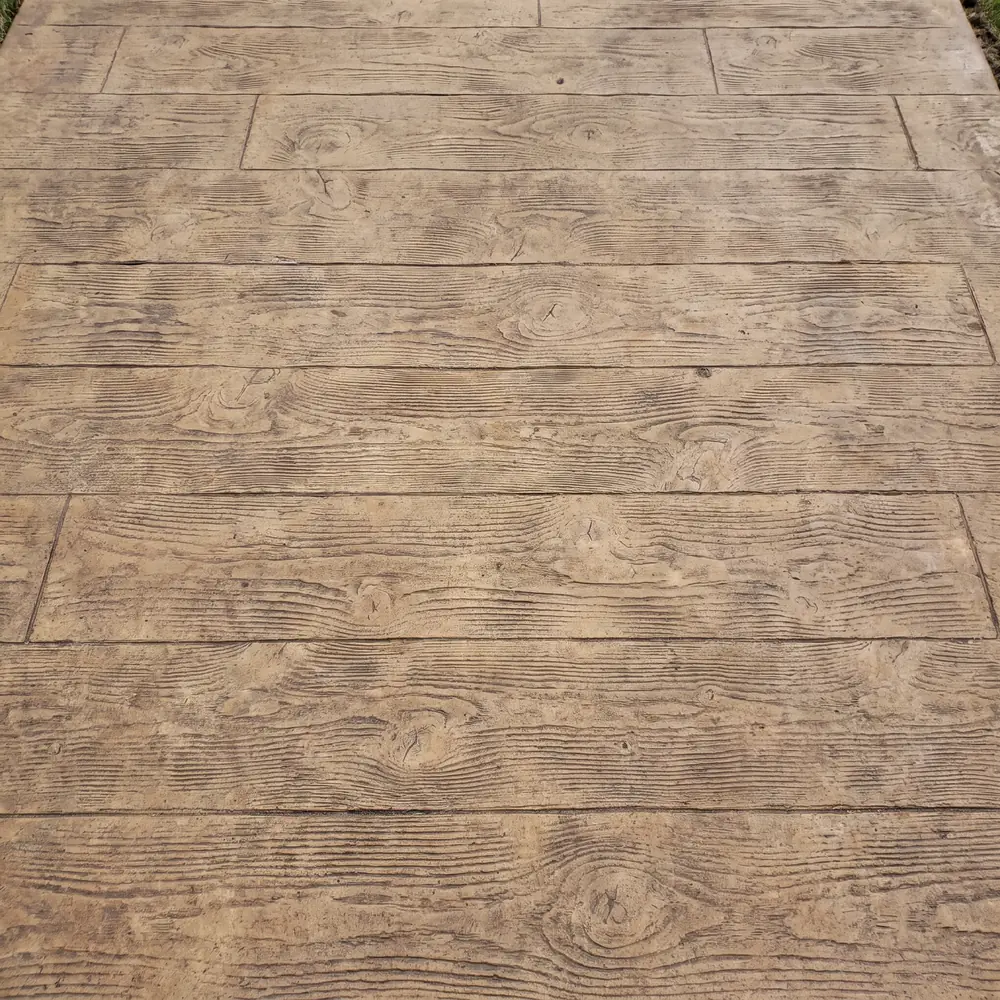
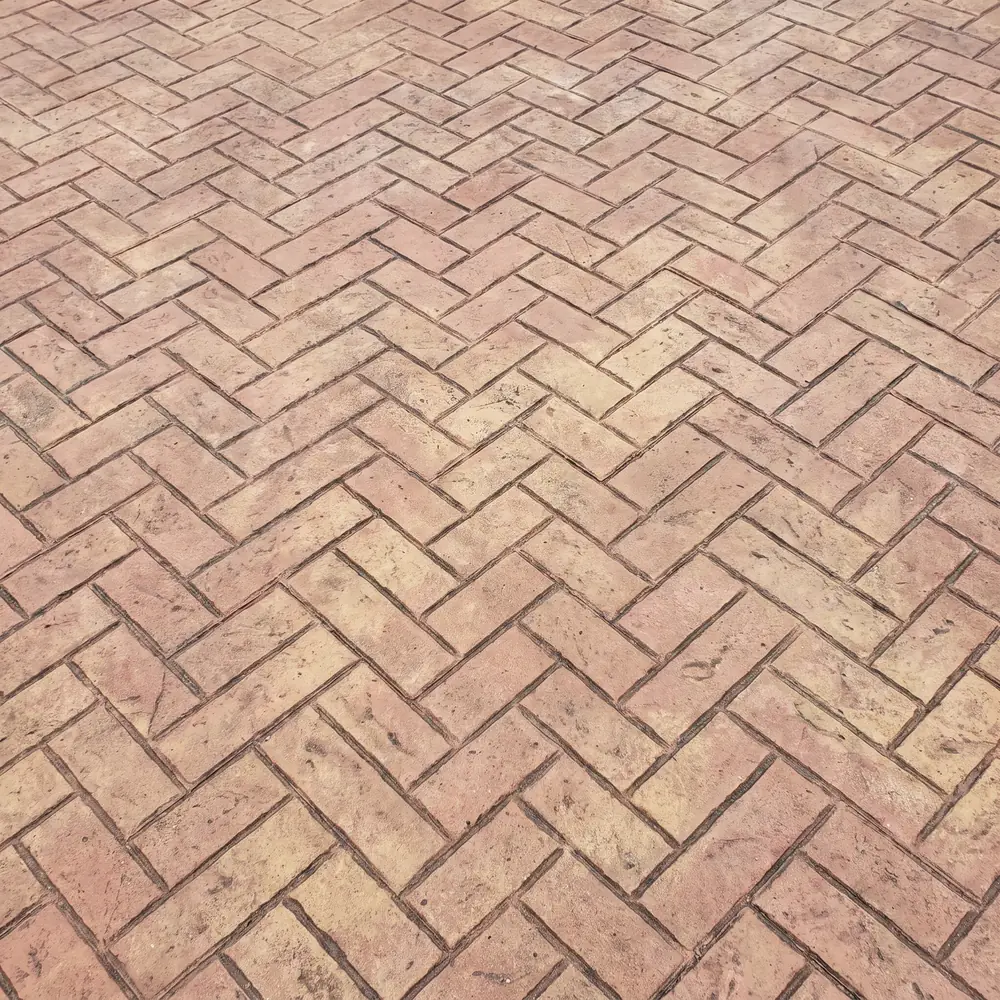
Every one of those is a single poured slab with the pattern pressed into the surface while the concrete is still plastic. There are no individual units to settle and no open joints to grow weeds.
Color: Integral, Release, and Stains
Color on a stamped slab is a system, not a paint job, and knowing the three layers helps you judge any bid. Integral color is pigment mixed through the entire load of concrete, so the base tone goes all the way down and a future chip shows colored concrete, not gray. Release color arrives during stamping: the powder or liquid that keeps the mats from sticking carries a second, darker tone that settles into the pattern's low spots and gives the surface its aged, two tone depth. Stains and tints come last, applied to cured concrete for accenting individual stones or enriching the field.
The practical version: insist on integral color as the base, expect the release to do the shadowing, and treat stains as the adjustment knob. Sealer then locks the color and is the layer you will maintain over the years.
Stamped vs Pavers vs Plain Concrete
| What matters | Stamped concrete | Pavers | Plain broom finish |
|---|---|---|---|
| Structure | One continuous slab | Hundreds of loose units on sand | One continuous slab |
| Weeds and ants | No open joints | Sand joints invite both | No open joints |
| Winter behavior | Moves as one unit; joints control cracking | Individual units heave and settle out of plane | Moves as one unit; joints control cracking |
| Maintenance | Reseal every 2 to 3 years to hold color and block salt | Re-sand joints, reset heaved units, weed control | Optional sealer; essentially none |
| Repairs | Patches are visible; plan joints well instead | Individual units swap invisibly | Patches visible but cheap |
| Look | Stone, slate, brick, or wood, in color | Genuine unit texture | Clean utilitarian gray |
That maintenance row is the honest tradeoff. Stamped concrete keeps its looks only if the sealer schedule is kept, every two to three years where weather and shovels hit it. In a freeze thaw, salt heavy climate the sealer is not cosmetic, it is the raincoat. If you know nobody will ever reseal it, plain broom finish or exposed aggregate will age more gracefully.
Decorative Concrete in Evanston's Historic Districts
Evanston takes its architecture seriously: four local historic districts, Lakeshore, Ridge, Northeast, and Oakton, plus more than 850 designated landmarks scattered across the city. Inside the districts, exterior work that needs a permit and is visible from the street generally needs a Certificate of Appropriateness before that permit is issued, and a change in material or appearance, which is precisely what decorative concrete is, is what the review considers. Routine like for like maintenance is exempt, and minor work review carries a modest fee of about $150.
This is not a reason to avoid decorative finishes in a district, it is a reason to design them deliberately. A cleft slate stamp in stone gray beside an 1890s Ridge Avenue house reads like restraint; bright terracotta plank pattern may draw questions. We factor the review into the schedule for district properties so the pour date does not depend on a meeting nobody planned for.
See the Patterns on Paper
Tell us the surface and the look you are after. We will bring pattern and color options matched to the house and a written price for each route.
(847) 380-8138Stamped Concrete Costs
Stamped work prices as plain concrete plus a decorative premium, because that is literally what it is. The slab, base, and tear out cost what they cost, then pattern complexity, color layers, and sealer add finishing labor and materials on top. Expect the premium to scale with ambition: one pattern in one color with release shading is the entry point, multiple patterns, borders, and hand stained accents climb from there.
Two ways to spend the premium wisely. Stamped borders around plain fields deliver most of the visual for a fraction of the finishing labor. And doing the stamped patio at the same time as a concrete patio extension or a walkway installation shares mobilization across the whole pour. As with everything we do, the estimate puts size, pattern, color system, and sealer in writing so nothing stays vague.
Evanston Stamped Concrete Questions
Yes, when it is built as winter concrete first and decoration second: air entrained mix, proper base, real control joints worked into the pattern, and sealer maintained on schedule. The failures people photograph are almost always mix or base failures that would have taken out a plain slab too, just less photogenically.
Plan on every two to three years for surfaces that see weather and traffic, sooner where snow gets shoveled and salt lands. Resealing is an afternoon of cleaning and rolling, not a construction project, but skipping it for years lets color fade and salt reach the surface. If low maintenance is the priority, plain broom finish or exposed aggregate asks less of you.
It can be if the sealer is applied like paint on glass. The texture of the stamp itself provides grip, and a grit additive mixed into the sealer keeps the surface walkable in rain and frost. On pool surrounds and shaded walks we spec the additive as standard, not as an option.
Cured concrete cannot take a stamp, the pattern is pressed while the slab is plastic. For existing slabs in sound condition, a stamped overlay, a thin engineered topping, can add pattern and color. Overlays are only as good as the slab underneath, so cracked or moving concrete needs replacement, not disguise. We will tell you which side of that line your slab is on.
They can review it. In the Lakeshore, Ridge, Northeast, and Oakton local districts, permitted exterior work visible from the street generally needs a Certificate of Appropriateness, and a change of material or appearance is exactly what that review looks at. Like for like maintenance is exempt. Approvals favor designs in keeping with the property, which stamped concrete in stone tones often is.
Not sure stamped is the right call? Compare it against the finishes on our concrete patio installation page, or start from what a concrete contractor in Evanston should walk you through first.
Price the Decorative Version
Send the project and the look you are chasing, a photo of the space helps. We will price the stamped version and the plain version side by side so the premium is a decision, not a surprise.
(847) 380-8138, Monday to Friday 8am to 5pm, Saturday 9am to 3pm.
Get a Free Estimate
Tell us about the project and we will get back to you within one business day. Prefer to talk? Call or text (847) 380-8138.