Concrete Contractor in Skokie, IL
Driveways, patios, service walks, steps, and garage floors across the village. Based next door in Evanston, minutes from every Skokie block.
Concrete Work in Skokie
Skokie's concrete is older than most people realize. Church Street got suburban Cook County's first paved concrete road back in 1933, and the postwar boom that followed earned Skokie the title of the world's largest village. The practical consequence, seventy years later: block after block of postwar homes whose original driveways, garage slabs, service walks, and stoops are all reaching the end of their lives at the same time.
That is the work we do. We replace driveways that have cracked into puzzle pieces, pour garage floors and the aprons that meet the village's alley grid, rebuild front walks and steps, and install patios sized to Skokie's lot rules. Estimates are free, written, and specific, and because our base is in Evanston, a Skokie address is effectively local for us: same service radius, same schedule, no travel padding.
Skokie's Rules for Concrete Projects
Skokie regulates concrete work more actively than most nearby suburbs, and knowing the system is part of doing the job right. The village's own permit guidance lists patios, driveways, and sidewalks among the projects that need permits, filed through a combined building and right of way application with a current plat of survey. Where the work touches the public right of way, the application requires the contractor to contact the village's Engineering Division for approval on site before placing any concrete, and right of way work is warrantied for three years on the village's paperwork.
The village also screens who is allowed to pour. Cement contractors must register annually with Skokie's Building Division, keep a trade surety bond on file, and carry at least one million dollars per occurrence in general liability coverage naming the village. Skokie goes as far as publishing a list of registered cement and mason contractors. For a homeowner, that is a free background check: whoever bids your project, ask whether their Skokie registration is current, and treat a shrug as an answer.
Two zoning numbers are worth knowing before you dream up a big pour. Single family lots in the R1 and R2 districts are capped at 50 percent impermeable coverage, with driveways, walks, and patios all counting toward the cap. And any project that adds more than 600 square feet of impermeable surface trips the village's tree preservation review, where parkway trees of any size are protected and root zones get fenced for the duration of construction. We run both checks against your plat before we price anything, because a project that fails review costs you a season.
Skokie Sidewalks: Where the Village Steps In and Where We Do
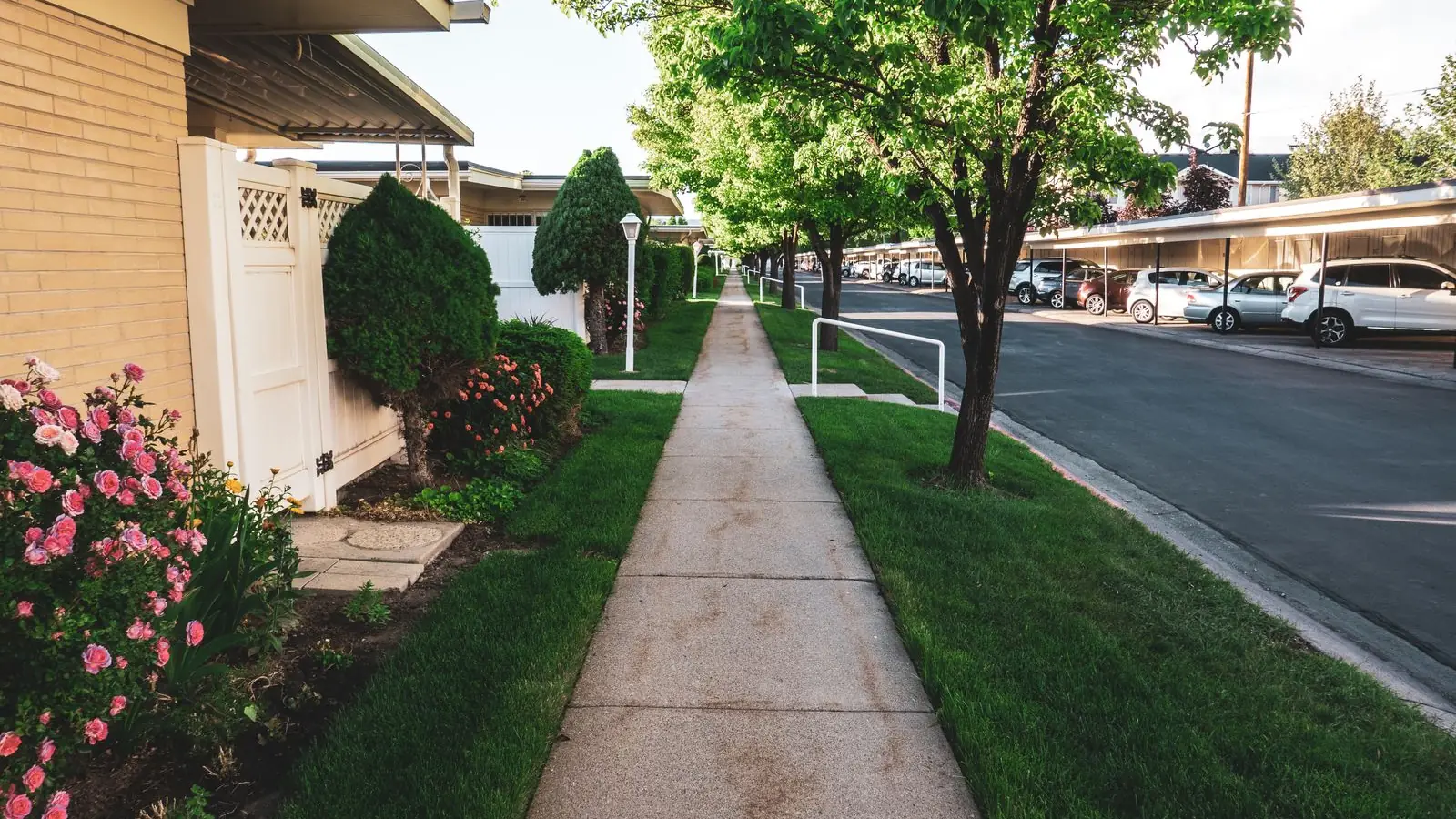
Skokie splits sidewalk responsibility in a way that confuses almost everyone. The public walk along the street falls under the village's shared cost replacement program, and here is the part most residents miss: when those squares are raised, sunken, or badly cracked, participation is not optional. The village requires the owner into the program, hires the contractor itself, and pays roughly half the cost. If your public walk qualifies, that program is the right path, and we will say so.
Everything else is yours: the service walk from the public sidewalk to your door, the carriage walk, the back walk to the garage, the stoop. The village program does not touch those, and that private flatwork is our lane. The same goes for curbs: the village funds annual curb and gutter replacement for damaged curbs, but the curb cut at your driveway is permitted and paid by the homeowner, which matters when a driveway replacement includes widening.
Planning Concrete Work in Skokie?
Tell us the project and the block. We will bring the village's rules, the lot math, and a written number.
(847) 380-8138Built on a Marsh: What Skokie Ground Does to Concrete
Skokie is named for the ground it sits on. The village was called Niles Center until 1940, when residents adopted an indigenous word for big swamp, an honest description of the marshland much of town was drained from. The soil never forgot. USDA soil mapping for the area shows urban fill over clayey material across most of the village, threaded with poorly drained silty clay loams. Clay holds water, water freezes, and freezing lifts whatever sits on it. That is why so many Skokie driveways heave at the same seams every February.
The village fights the water side of this constantly: downspouts must be disconnected from sewer lines, and Skokie runs a yard drainage assistance program and a shared cost overhead sewer rebate worth up to $7,500. We fight it on the concrete side. Flatwork here gets a properly compacted stone base deep enough to drain, grading that moves water away from the slab and the house, and an air entrained mix rated for freeze thaw. On this ground, the base and the pitch are not upsells. They are the difference between a slab that lasts for decades and one that starts moving within a few winters.
What We Pour Across the Village
From the bungalow blocks around Downtown Skokie and the Swift District to the ranches near Old Orchard and the side streets off Dempster, Oakton, and McCormick by the sculpture park, the work is the postwar housing stock's greatest hits:
- Concrete driveways. Full replacement and widening for drives poured when the house was new. Aprons and curb cuts handled with the village's right of way process, including the pre pour Engineering sign off.
- Garage floors and alley aprons. Skokie's streetcar era alley grid means detached garages loading from alleys the village plows at six inches of snow but never salts. We pour the floors, the aprons, and the approaches that tie into them.
- Service walks and walkways. The private walks the village program does not cover, built at usable widths and pitched to drain on clay.
- Steps and stoops. Repair, leveling, and full repours for the front entries of seventy year old homes.
- Patios and stamped or decorative finishes. Sized against the 50 percent lot coverage cap, with finish options from broom to stamped slate.
Skokie Concrete Questions
Yes. The Village of Skokie's own permit guidance lists patios, driveways, and sidewalks among projects that require a permit, and permit submittals run through the village's combined building and right of way application. Work in the right of way, like a driveway apron, additionally requires village Engineering approval on site before any concrete is placed. We handle the paperwork as part of the job.
It depends which sidewalk. For the public walk along the street, Skokie runs a shared cost replacement program, and when squares are raised, sunken, or badly cracked, participation is required, with the village hiring the contractor and covering about half the cost. Your service walk to the front door and any carriage walk are yours alone, and that private work is exactly what we do.
The village requires annual contractor registration with its Building Division. For cement contractors that means a registration on file, a trade surety bond, and at least one million dollars in general liability coverage naming the Village of Skokie. Skokie even publishes a list of registered cement and mason contractors. Before you sign with anyone, ask whether their Skokie registration is current.
Two ways. Skokie's tree preservation rules kick in when a project adds more than 600 square feet of impermeable surface, and parkway trees of any size are protected, with root zones fenced during construction. Separately, single family lots in the R1 and R2 districts are capped at 50 percent impermeable coverage, and driveways, walks, and patios all count toward it. We check both against your plat before quoting.
We are based in Evanston, directly next door. Skokie estimates get scheduled the same way as Evanston ones, and driving to the job adds minutes, not surcharges.
Get a Skokie Estimate
Tell us the project and where in the village it is. We will look at the site, check the lot coverage and permit picture, and put the price in writing. If the village's sidewalk program is the better deal for your public walk, we will tell you that too.
(847) 380-8138, Monday to Friday 8am to 5pm, Saturday 9am to 3pm.
Get a Free Estimate
Tell us about the project and we will get back to you within one business day. Prefer to talk? Call or text (847) 380-8138.