Concrete Driveways in Evanston, IL
Full replacement, new installation, widening, and aprons. Built on a corrected base, finished for winter, and permitted the way Evanston actually requires.
Concrete Driveway Replacement and New Installation
Most calls we get about concrete driveways start the same way: the slab is cracked into shifting sections, the surface is flaking off in sheets after a salty winter, or the low spot by the garage has become a pond. A concrete driveway in this climate is not decoration, it is a structure that carries two tons of vehicle across ground that freezes 42 inches deep, and when it fails it fails from the bottom up or the top down. The bottom is the base. The top is the finish and the salt.
We replace failed driveways, pour new ones where there was gravel or asphalt, widen single strips into full width parking, and rebuild the apron where your driveway meets the street. Zoning is part of the picture here: Evanston requires two off street parking spaces for a single family home, which is exactly why so many older one car strips end up widened. If your project is really about a garage slab or the pad in front of it, that work lives on our garage floor replacement page.
How a Driveway Project Works in Evanston
The pour is one day. The project is a sequence, and the sequence is where quality is decided.
-
Site visit and written estimate
We measure, check slopes and drainage, look at what the old slab is telling us about the base, and give you a written estimate with the full scope spelled out. No pressure, no expiring discounts.
-
Permit paperwork
Evanston requires a building permit for flatwork, and the application includes a plat of survey. The base permit fee runs 2 percent of construction cost and the driveway line item is $35 for residential work. A straight remove and replace at a non historic property skips the standard inspections but requires before and after photos filed with the city. Skipping the permit entirely is the expensive option: the city raises the fee 50 percent when work starts unpermitted.
-
Tear out and haul away
The old slab gets broken, loaded, and hauled off site. This is also the moment of truth for the project, because whatever the old driveway was hiding, bad fill, buried debris, a washed out corner, is now visible and fixable.
-
Base correction
This step changes by neighborhood. USDA soil mapping puts sandy ground along the Ridge and lakefront corridor and heavy clay complexes across inland and north Evanston, with much of the city mapped as urban fill. Sand drains and behaves. Clay holds water and heaves. Fill does whatever the fill wants. We excavate to sound material, then build back with compacted aggregate so the slab bears on something that drains.
-
Forms, reinforcement, and the pour
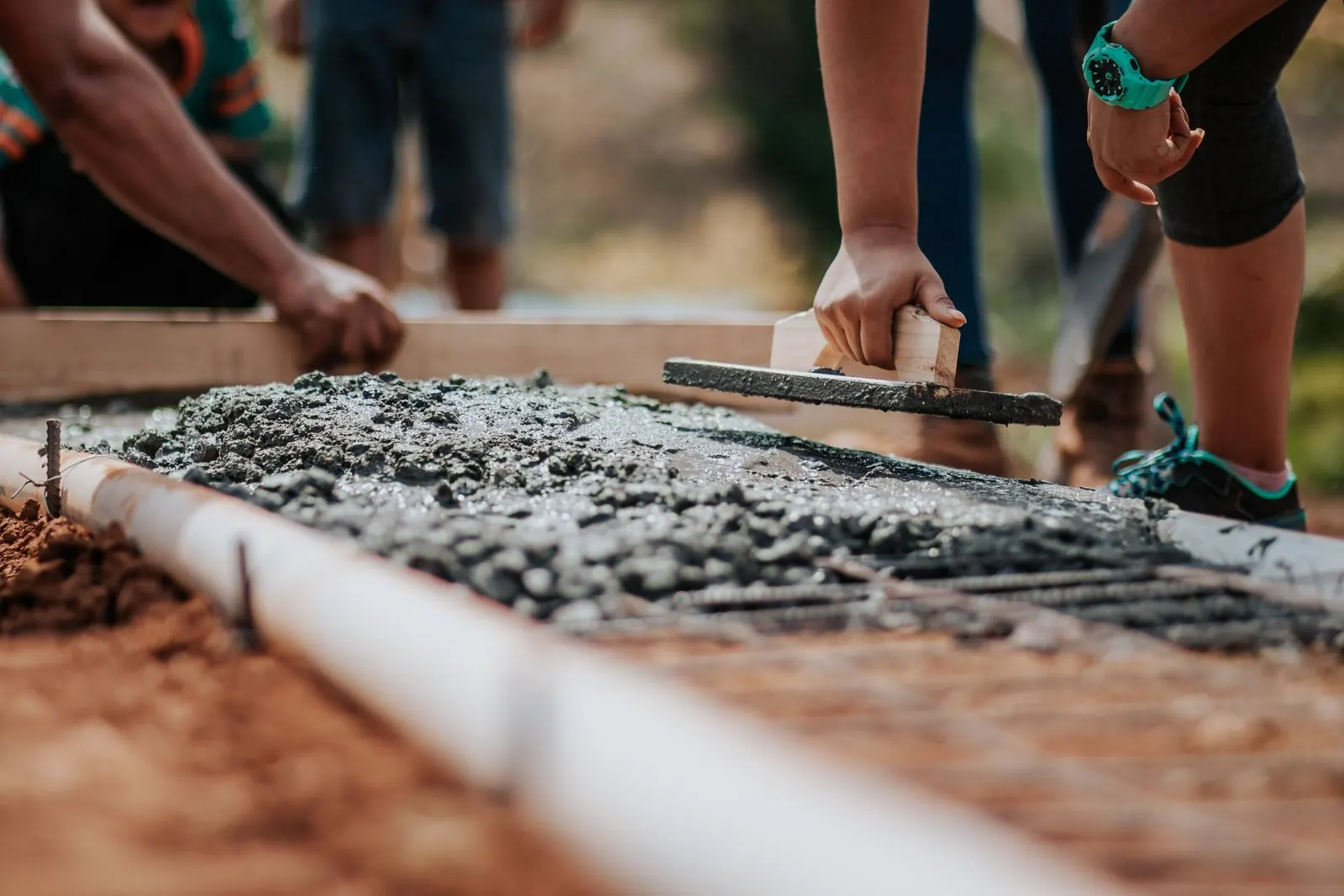
Forms set the final grades so water runs away from the garage and the house, reinforcement goes in, and the concrete is placed, struck off, and floated. Exterior mixes here are air entrained because Evanston's adopted code classifies the area as severe for weathering. The finish is a broom texture, which is what you want under snow and boots.
-
Joints, cure, and inspections
Control joints are cut to tell the inevitable shrinkage cracks where to go. The slab then needs cure time: walking traffic after about a day or two, passenger vehicles at roughly a week. Standard permitted flatwork carries two city inspections, and we schedule around them so the project keeps moving.
Permits, the Parkway, and Your Apron
Here is the part of an Evanston driveway that surprises people: the last stretch of it is not on your property. The public right of way typically begins 12 to 18 inches from the edge of the sidewalk nearest your house and runs to the street, which means the apron, and usually a slice of what looks like your front lawn, belongs to the city. Work in that zone needs a separate right of way permit through Traffic Engineering, on top of the building permit for the driveway itself. The residential apron fee is $50, and the city requires higher liability coverage minimums from contractors working in the right of way than it does for private work.
Two consequences worth knowing before you schedule. First, obstructing the right of way without a permit runs $500 per day, so a contractor who shrugs off the paperwork is gambling with your money. Second, the city timeline is real:
Seasonal moratorium: Evanston allows no street or improved alley openings from November 15 through March 31. An apron that fails in October waits for spring unless it qualifies as an emergency. If your driveway is on its last season, the time to call is spring through early fall.
The same right of way rules govern public sidewalk squares, which have their own city cost sharing program. That whole subject, including what the city pays for, is on our sidewalk and walkway repair page.
Get Ahead of the Season
Driveway schedules in Evanston fill from spring onward, and the city's own calendar closes the street on November 15. A written estimate now costs nothing and holds your place in line.
(847) 380-8138Timing a Driveway Around Evanston Winters
Concrete does not care about the calendar, it cares about temperature and moisture. The working season for exterior flatwork here runs roughly April into November, and the best pours happen when the slab has weeks of mild weather to cure before its first hard freeze and, just as important, before its first salting. Salt on immature concrete is how a one year old driveway ends up looking ten.
Chicago's climate normals explain the local failure pattern: December through February, daytime highs sit above freezing while nights drop below it, so a slab here freezes and thaws dozens of times instead of once. Every cycle pumps water in and out of the surface. Air entrained concrete gives that water microscopic room to expand, which is why it is the standard mix for exterior work in a severe weathering zone, and why a bargain pour with the wrong mix is no bargain.
Late fall projects are still worth pricing. Tear out and base work can sometimes be staged, apron work simply has to respect the moratorium, and being first on the spring schedule beats calling in May with everyone else.
Concrete Driveway Costs in Evanston
Every honest driveway bid is built from the same drivers: square footage, how much old concrete has to come out and be hauled, what the base needs once it is exposed, reinforcement, the finish, and whether the apron is in scope. Tear out depth and base correction are the quiet variables. Two identical looking driveways can price apart by thousands because one sits on draining sand off the Ridge and the other sits on saturated clay that needs to be dug out and rebuilt.
For a sanity check, use the city's own math. Evanston's sidewalk cost share values professionally replaced public flatwork at $8.40 per square foot for the homeowner half, or about $16.80 per square foot in total. Private driveway work carries costs that municipal volume work does not, so expect bids above that benchmark, but a quote several multiples of it should come with a very specific explanation. Permits stay small: $35 for the driveway line, 2 percent of construction cost for the base building permit, $50 for a residential apron.
We put all of it in writing, walk you through what each part of the scope is doing, and answer questions before you sign anything. That is the whole sales process.
Evanston Driveway Questions
Yes. Evanston requires a building permit for flatwork, including driveways, and the application includes a plat of survey. Straight remove and replace projects at non historic properties skip the two standard inspections but require before and after photos submitted to the city. Starting without a permit raises the permit fee by 50 percent.
Outside the city's annual moratorium. Evanston does not allow street or improved alley openings from November 15 through March 31, so apron work needs to be scheduled in the warm season. Emergencies are considered case by case, but a planned replacement should never depend on one.
Plan on walking on it after about a day or two and parking a passenger vehicle on it at roughly seven days, once the slab has developed most of its strength. Concrete keeps gaining strength for weeks after that, which is why we keep heavy trucks and dumpsters off a fresh driveway for as long as possible.
Frost heave. Water in the ground freezes, expands, and lifts whatever sits above it, then drops it again in a thaw. Evanston's own adopted residential code lists the local frost depth at 42 inches and classifies the area as severe for concrete weathering, and much of the city sits on slow draining clay or old fill that holds water. A driveway that was poured over a poor base moves every winter until it breaks.
It can. Added concrete counts toward Evanston's impervious surface caps for residential lots, and a wider curb cut involves the city's right of way rules. We check both before quoting a widening so the project does not stall in review.
Thinking beyond plain gray? Stamped borders and decorative finishes pair well with a new driveway, covered on the stamped and decorative concrete page. And if the numbers are the question, our homepage covers what a concrete contractor in Evanston should be showing you in a bid.
Price Your Driveway
Send the address and a sentence about the project, or call and describe it. We will look at the site, measure it, and hand you a written estimate that explains itself. If the right answer is a repair instead of a replacement, we will tell you that too.
(847) 380-8138, Monday to Friday 8am to 5pm, Saturday 9am to 3pm.
Get a Free Estimate
Tell us about the project and we will get back to you within one business day. Prefer to talk? Call or text (847) 380-8138.