Concrete Repair Guide for Evanston Homeowners
Most cracks need less than you fear. Some need more than a tube of filler. Here is how to tell which one you are looking at, what each repair actually involves, and when the honest answer is replacement.
Concrete Damage Diagnosis: What Are You Looking At?
Start here, before anyone quotes you anything. Find the row that matches your slab, then read the section it points to. The right concrete repair depends far more on the cause than on how bad the damage looks.
| What you see | Most likely cause | What it usually means |
|---|---|---|
| Thin crack, both sides level, same width for years | Shrinkage while the concrete cured | Cosmetic. Often nothing to do, or a flexible sealant to keep water out |
| Crack with a lip, one side lower | Soil under one side settled or washed out | The slab is moving. Filling it alone will not last; see slab repair below |
| Slab or crack higher in winter than in summer, or lifted beside a tree | Frost heave or roots | Fix the cause or the repair repeats every winter |
| Surface flaking off in thin layers, rough and sandy | Scaling from freeze thaw and deicing salt | Patch or resurface if the concrete below is hard; replace if it is soft deep down |
| Small cone shaped holes scattered across the surface | Popouts: porous stones near the surface that froze and burst | Mostly cosmetic. Patch if they hold water |
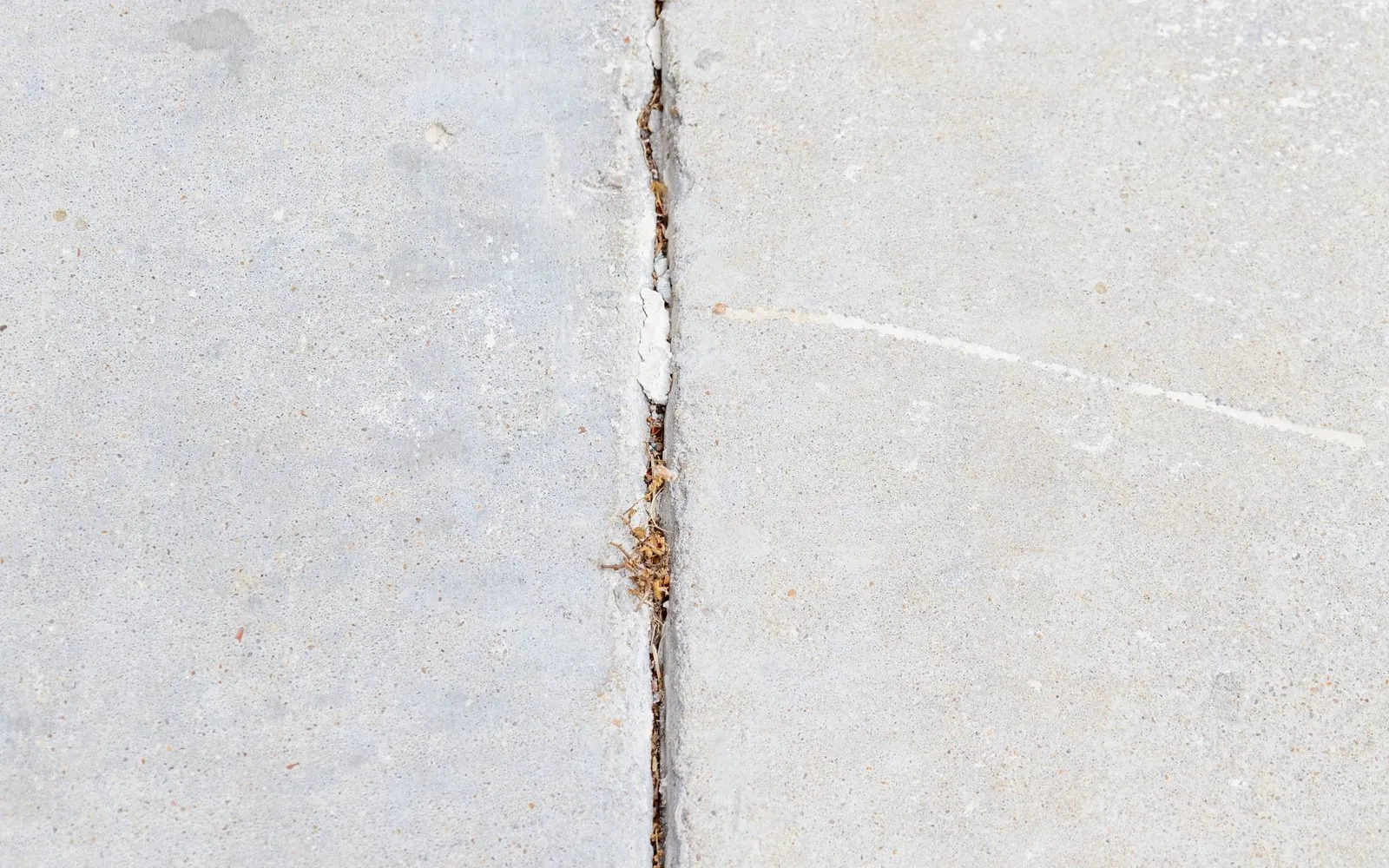
| Joints gaping, edges chipped, weeds growing through | Joint filler failed and water got in | Clean and reseal the joint with a flexible sealant, rebuild broken edges |
| Slab broken into several pieces that rock underfoot | Base failure or overloading | Usually a replacement of that section, not a repair |
| Crack in a foundation or basement wall | Many possibilities | A different trade. See when a crack means a bigger problem |
The first honest admission belongs right here: a lot of what people photograph and send to a concrete company needs no repair at all. Concrete cracks. Every slab in Evanston has cracks somewhere, and a fine line that has looked the same for five winters is the slab doing what concrete does. Spending money on it is optional.
Concrete Crack Repair: Which Cracks Matter
Concrete crack repair starts with one question: is the crack still moving? A crack that has stopped moving can be sealed or filled and forgotten. A crack that opens every winter, or has one side dropping, is a symptom, and the repair has to deal with what is moving the slab. Open each crack type below for what to look for and what fixes it.
Hairline Shrinkage Cracks
Usually leave alone
Concrete shrinks as it dries, and if the control joints were not cut deep enough or close enough, the slab cracks somewhere else to relieve that stress. The result is a thin, often random crack with both sides at the same height, and it shows up within the first year or two. It is not a structural problem. Seal it only if it sits where salt water collects, such as at the bottom of a sloped walk or where cars drip, because water in any crack is what freeze and thaw works on.
Settlement Cracks
Fix the base, then the crack
When the ground under part of a slab compresses or washes out, that part drops and the slab cracks along the line where support ends. The giveaway is a lip: run your palm or a straightedge across the crack and one side is lower. The classic spots are patios and walks poured against the house, where the soil next to the foundation was backfilled loosely when the house was built, and anywhere a downspout empties beside the concrete. USDA soil mapping shows sandy ground along the Ridge and the lakefront, heavy clay inland and in north Evanston, and much of the city as urban fill. Sand drains. Clay and fill are the ground that keeps moving.
Heave Cracks
Seasonal, watch the cause
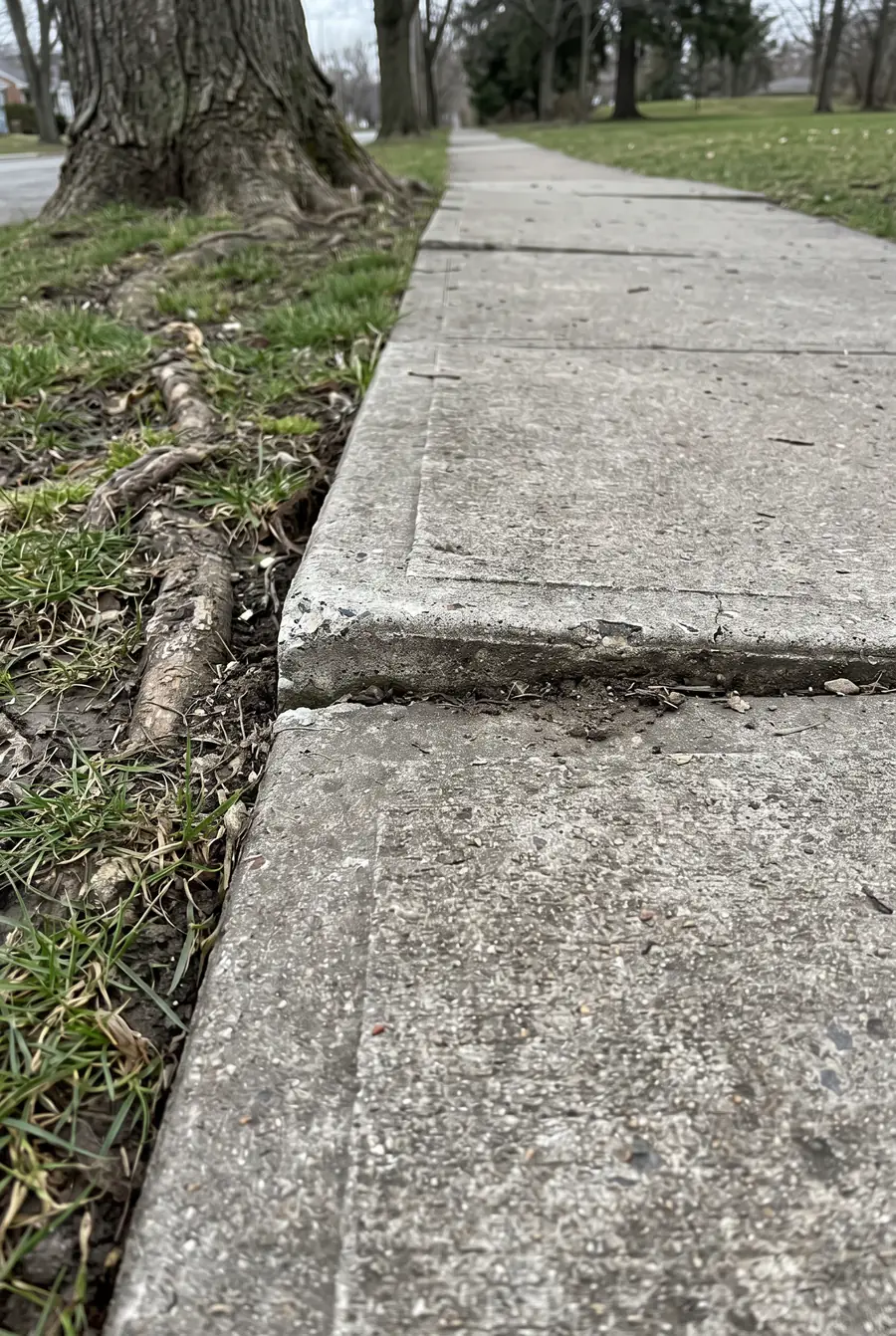
Frost heave pushes a slab up when wet soil under it freezes and expands. Evanston's adopted residential code puts the local frost depth at 42 inches, while a patio or walk sits on a few inches of base, so the ground under flatwork freezes every winter. Heave cracks often look worse in February and partly close by July. Tree roots do the same thing year round, and in Evanston a root under a slab comes with rules: the city requires a Tree Preservation Permit for exterior work within 25 feet of any tree, roots included.
Structural Cracks
Get it looked at
Wide cracks that keep growing, cracks through a slab that carries a load such as a garage floor or a stoop, cracks that continue from flatwork into a foundation wall, or several cracks meeting in a starburst pattern all point to something more than shrinkage. On flatwork that usually means base failure and replacement of that section. On a wall, see the section on foundation cracks below; it is a different trade.
How Concrete Cracks Get Repaired, Method by Method
These are the methods you will hear about. Each is right for some cracks and wrong for others, and the wrong match is the most common reason a crack repair fails.
| Method | What it is | Right for | Wrong for |
|---|---|---|---|
| Route and seal | The crack is cut wider into a clean, even channel, blown out, and filled with a flexible sealant | Slab cracks that open and close a little with the seasons | Cracks with a height difference; the slab itself has moved |
| Flexible joint sealant (polyurethane or silicone) | An elastic sealant, often self leveling for flat surfaces, laid over a foam backer rod | Control joints, the joint where a slab meets the house, narrow stable cracks | Crumbling edges; sealant needs sound concrete on both sides to grip |
| Epoxy injection | A rigid epoxy pumped into a crack to glue the two sides back together | Dormant structural cracks, mostly in walls and structural members | Cracks that still move; the concrete simply cracks again next to the epoxy |
| Polymer modified patching mortar | A cement based repair mortar with added polymers that help it bond to old concrete | Spalls, popouts, broken edges and corners | Moving cracks, and patches feathered thin at the edges |
| Section replacement | The damaged panel is saw cut out joint to joint, the base fixed, and new concrete poured | Broken, sunken or badly scaled panels | A slab where most panels are failing; that is a replacement job |
One rule covers almost every slab: control joints are supposed to move, so they get a flexible sealant, never mortar or a rigid patch. A joint packed solid with hard material stops being a joint, and the slab cracks somewhere else to make a new one.
Spalling, Scaling and Popouts: Repairing Salt Damaged Concrete
Scaling is the surface of the concrete coming off in thin flakes, leaving a rough, sandy texture and sometimes exposed stone. Spalling is the deeper version, where chunks break away. Both are mostly a winter story here. Deicing salt keeps meltwater liquid and pulls it into the top of the slab, and the next hard freeze pops the surface off. Evanston's adopted building code classifies the area as severe for concrete weathering, which is why exterior concrete here is supposed to be air entrained, with microscopic bubbles that give freezing water room to expand.
There is a piece of local history behind that rule. The Portland Cement Association ran a long term outdoor test plot in Skokie, where concrete slabs placed between 1958 and 1964 were salted with calcium chloride after snowfalls and rated over the decades that followed. Its published findings explain a lot of what shows up on North Shore driveways and walks: properly air entrained concrete held up much better against freeze and thaw with salt, and concrete placed in summer and given time to cure and dry before its first winter did better too. Slabs that scale are usually missing one of those, and no repair product changes the concrete underneath.
Patching Spalls and Popouts
A popout is a small cone shaped hole where a porous stone just under the surface soaked up water, froze and burst. A few are cosmetic. Spalls and clusters of popouts get patched with a polymer modified repair mortar, and the edges of the repair are what decide whether it lasts. A patch that thins out to nothing at the edges breaks away at the edges, so a good repair is cut back to a clean, squared edge with some depth to it, cleaned down to sound concrete, and filled full depth.
When Scaling Covers the Whole Slab
If the concrete under the scaling is still hard when you scrape it with a screwdriver, a thin bonded topping over the whole surface can work; if it gouges or crumbles, replacement is the better money. Our guide to resurfacing scaled and worn concrete covers that test, the surface prep, and why toppings let go.
Concrete Slab Repair for Sunken and Heaved Sections
A slab that has dropped or lifted is a different problem from a crack, and it is usually the one that creates a trip hazard. Evanston's 50/50 sidewalk program offers a useful yardstick for any slab: on public squares, the city treats a vertical lip of about half an inch as a qualifying defect. A lip that size on your patio or front walk is worth fixing for the same reason.
Raise It or Replace It?
If the dropped section is still one solid piece and whatever washed the ground out can be fixed, it can often be raised instead of torn out, usually for less. Our guide to concrete leveling and mudjacking covers which slabs qualify, slurry versus foam, and why lifted slabs sometimes settle again.
Cutting Out and Replacing a Section
When a section is broken, badly scaled, or sunk too far, the reliable fix is to saw cut it out at the joints, dig down to firm material, rebuild and compact the base, and pour a new panel. It costs more than lifting, but it resets the base as well as the surface. On a public walk, that is exactly how the city replaces squares.
Heaved by Frost or Roots
A heaved slab cannot be pushed back down. If frost is the cause, the fix is drainage and a better base under a replacement panel. If a tree root is the cause, Evanston's tree rules mean the root usually wins, and the walk or patio gets rebuilt around it, ramped over it or bridged across it, with a Tree Preservation Permit in hand.
Concrete Patio Repair
Patios fail in a few predictable ways, and most of them start at the house. A patio poured against the foundation sits on the loosest soil on the lot, so the side nearest the house is the side that sinks, and once it tips toward the house it sends rain toward the basement instead of away from it. That one problem is worth fixing quickly, whatever the patio looks like otherwise.
- Gap where the patio meets the house. Clean it out, push in a backer rod, and seal it with a flexible sealant. This is one of the most useful small repairs on any property, and a careful homeowner can do it.
- Patio tipped toward the house but in one piece. A candidate for lifting by a slab lifting specialist, with the downspout that caused it moved first.
- Scaling near the back door. Usually salt tracked or thrown there. Patch or resurface if the concrete is hard underneath, and switch to sand on that slab.
- Cracked into pieces, or heaved by a root. Section replacement, or a new patio if the damage is spread across it.
- Stamped patio looking faded and worn. Often the sealer wearing off rather than the concrete failing. The care of stamped and decorative finishes is its own topic.
Be realistic about appearance. A patched patio looks patched, and stamped or exposed aggregate patterns are especially hard to match. If the slab is sound but you dislike how it looks, repair is the cheaper answer and replacement is the better looking one. When the patio is past repair, planning a new concrete patio covers sizing, finishes and Evanston's lot coverage rules.
Repair or Replace Concrete?
The answer comes from the slab, not from the size of the invoice. Repair usually makes sense when:
- The cracks are level and stable. No lip, and no new width since last year.
- The surface damage is skin deep. The concrete under the flaking is hard when scraped.
- Any sunken section is still one piece and the cause of the settling can be fixed.
- The damage is local. A panel or two out of many, not the whole slab.
- The slab still drains the right way, away from the house and the garage.
Replacement is the better buy when the slab is broken into many pieces that move, when the concrete is soft well below the surface across most of it, when it pitches toward the house, or when the repairs add up to a large share of what new concrete would cost. Evanston's sidewalk program uses a similar line for public squares: a square broken into three or more pieces, or scaled across a third or more of its surface, qualifies for replacement.
Here is what that costs a concrete company to say out loud: if your driveway, walk or patio is sound with a few cracks, a careful repair, sometimes one you can do yourself, beats a new slab. A contractor who only ever recommends replacement is selling the job they prefer.
Not sure which row of the table you are in?
Text a photo of the damage, with something in the shot for scale. We will tell you what we see, whether it is work we do, and if it is not, what kind of contractor to call.
(847) 380-8138DIY Concrete Crack Filler vs Professional Repair
Plenty of people searching for concrete crack filler should buy some. A tube of good sealant from the hardware store is the right answer for more cracks than contractors like to admit. It is the wrong answer for a few specific ones.
What Store Bought Crack Fillers Do Well
- Self leveling polyurethane or silicone sealant on narrow, level cracks and control joints in walks, patios and driveways. It stays flexible through winter and keeps water out.
- Foam backer rod plus sealant on wider joints, especially the gap between a slab and the house.
- Polymer modified patching mortar on small chips, popouts and shallow spalls, if the edges are cut back square and the hole is clean.
- Acrylic latex crack filler as a cosmetic fix on hairline cracks, with the expectation that it will need redoing.
Where Crack Fillers Fail
- Cracks with a lip. The slab moved. Filler hides the symptom and the trip hazard stays.
- Crumbling edges. Sealant grips the edges of a crack; if they are rotten, it peels out with them.
- Dirty, damp or cold cracks. Most failures are prep: dust, old filler, moisture, or a slab colder than the label allows.
- Rigid products in moving cracks. Epoxy kits and hard patches crack again beside the repair, and hydraulic cement is for plugging leaks in walls, not sealing slabs.
- Sealant smeared over the top instead of filling the crack. It wears off under traffic and shovels in a season.
The method matters more than the brand. Dig out loose material and old filler, vacuum or blow the crack clean, let it dry, add backer rod where the crack is deep, and fill it so the sealant sits just below the surface, not mounded over it. Do it on a dry day in mild weather. If you do all that and the crack reopens with a height difference the next spring, the problem is under the slab, not in the filler.
When a Crack Means a Bigger Problem
Some cracks are messages about the house, not the concrete. A crack in a basement or foundation wall, especially one that leaks, is wider at one end, or shows up with doors and windows that start sticking, belongs to a foundation repair specialist or a structural engineer, not a flatwork contractor. The same goes for stair step cracks in brick or block above a foundation, and for a retaining wall that is leaning. Epoxy and polyurethane crack injection, the methods you will read about for those walls, are their trade.
Flatwork can still be part of the cause. A patio or walk that tips toward the house, or a downspout that empties onto a sunken slab, can send water straight at the foundation. Fixing that slab is concrete work; fixing the wall is not. Where both are involved, start with the wall assessment so the slab work fits what the foundation needs.
What Drives Concrete Repair Cost
We have not found a national survey of concrete repair prices solid enough to repeat here, and we do not publish a repair price sheet, because two slabs with the same crack can need very different work. What we can tell you is what moves the number on any concrete repair estimate, from anyone:
- Prep, more than material. Routing, cleaning, grinding and cutting back to sound concrete are the labor, and the part a low bid tends to skip.
- Total length and width of cracks. Sealing is priced by the run, and wide cracks need backer rod and more sealant.
- How far a slab dropped and how big the void is under it, for lifting.
- Whether the base has to be rebuilt. Section replacement on clay or fill costs more than on draining sand.
- Access. A backyard patio reached through a gate costs more to work on than a slab beside the street.
- The finish. Matching stamped or exposed aggregate concrete takes more work than a broom finish, and still will not be exact.
- Permits. Evanston requires a building permit when flatwork is removed and replaced, and work on the parkway, such as an apron, adds a separate right of way permit.
- Minimum charges. One crack and six cracks need the same trip and the same equipment, so bundle everything on the property into one visit.
For public sidewalk squares there is a published benchmark: the city's 50/50 program sets the homeowner share per square foot each year, explained on our sidewalk cost page. For everything else, compare written estimates that spell out the prep, not just the bottom line.
When to Repair Concrete in Evanston
The season decides more concrete repairs than the budget does. A rough calendar for Evanston and the North Shore:
-
Spring: inspect and plan
Walk the property once the snow is gone. Winter shows you what moved: new lips, wider cracks, fresh scaling. Heave cracks may close again as the ground thaws, so note them and look again in summer before paying to fix them.
-
Late spring to early fall: do the work
Sealants and patch materials need a dry slab and temperatures above the minimum on the label, and new concrete wants weeks of mild weather to cure before its first freeze and first salting. This is also when Evanston's 50/50 sidewalk program replaces the squares it accepted in its spring signup.
-
Fall: the deadline
A crack sealed before the first salt does not spend the winter getting wider. Anything that touches the street or an improved alley has a hard stop: the city allows no street or improved alley openings from November 15 through March 31, except emergencies.
-
Winter: hold the line
Keep salt off damaged and recently patched concrete, use sand for traction, and keep downspouts pointed away from slabs. A trip hazard on a public sidewalk can be reported to 311, and the city typically patches it with temporary asphalt within a few days. That black wedge is a placeholder, not a repair.
After any repair, the biggest thing you control is salt. A penetrating sealer can slow how much water and salt soak into a sound slab, and keeping deicer off it does even more.
Concrete Repair Contractors: Who Fixes What
"Concrete repair near me" turns up several different trades, and the right one depends on the row of the table you landed in. Crack sealing and joint sealing are done by sealant contractors and handy homeowners. Lifting sunken slabs is often a specialty of its own. Foundation walls belong to foundation repair companies and structural engineers. Flatwork contractors cut out and replace sections and pour new slabs.
This page is a guide, not a menu. The repair work we do is on these pages:
- Garage floor repair: crack repair, resurfacing and leveling for cracked, pitted or sunken garage floors.
- Concrete step and stoop repair: patching and resurfacing worn steps, lifting settled stoops, or tearing out and repouring.
- Sidewalk square replacement: including how Evanston's 50/50 cost share program works, and private replacement when your squares miss it.
- Driveway replacement: and a straight answer when a repair is the better call than a new driveway.
Text a photo to (847) 380-8138 or use the form. The service menu has no repair option, so leave it on Not Sure and describe the damage in the details box.
Get a Free Estimate
Tell us about the project and we will get back to you within one business day. Prefer to talk? Call or text (847) 380-8138.
Concrete Repair Questions
No. A hairline crack that is not growing, with both sides at the same height, is usually shrinkage the slab did to itself while it cured, and it can be left alone. Fill a crack when it is wide enough to hold water, when it sits where salt water collects, or when it runs beside the house. Watch it instead when it is getting wider or one side is rising or dropping, because then the slab is moving and filler only hides that.
For a narrow crack in a slab you walk or drive on, a flexible polyurethane or silicone sealant made for horizontal concrete, usually sold as self leveling, outlasts a rigid patch because it can stretch as the slab moves through the seasons. Wider cracks need a foam backer rod pushed in first so the sealant forms a thin, flexible band instead of a deep plug. Rigid patching products belong on chipped spots and shallow holes, not on cracks that open and close.
Often, if the sunken piece is still one solid slab and the cause of the settling can be fixed. A slab broken into pieces, scaled, or heaved by a root needs a section replacement instead. Our concrete leveling guide explains which slabs qualify and how the lifting methods compare.
Evanston requires a building permit for flatwork when concrete is removed and replaced, and any work on the city parkway, such as a driveway apron, needs a separate right of way permit. Whether a smaller repair like sealing cracks or patching a step edge needs one is a question for the city permit desk, and it is worth asking before work starts. Work near trees can also trigger the city's Tree Preservation Permit.
Rarely, and anyone who promises a perfect match is guessing. New patch material and new concrete start a different color from a slab that has weathered for decades, and the difference fades slowly if at all. Stamped and exposed aggregate finishes are the hardest to match. If appearance matters, replacing a whole panel from joint to joint looks far better than a patch in the middle of one.
Mostly no. Sealants and patching materials list a minimum temperature on the label, and they need a dry, salt free surface to bond, which an Evanston slab in January does not offer. Work that opens a street or improved alley is barred by the city from November 15 through March 31 except in emergencies. A trip hazard on a public sidewalk can be reported to 311 for a temporary asphalt patch, and the permanent fix waits for spring.
We do specific repairs only, namely garage floor repair, step and stoop repair, and sidewalk square replacement, including squares that go through the city's 50/50 program, and this guide links to each one. We also replace driveways, and we will say so when a repair is the better answer for one. For the rest, such as lifting a sunken patio or sealing cracks in a slab we are not otherwise working on, we would rather tell you which kind of specialist to call than stretch to fit the job.
Not Sure What the Crack Means? Ask Before You Fix It
Evanston Concrete Co is a concrete contractor in Evanston serving the North Shore. Send a photo and we will tell you honestly whether it is something to fix, something to watch, or something for a different trade.
(847) 380-8138